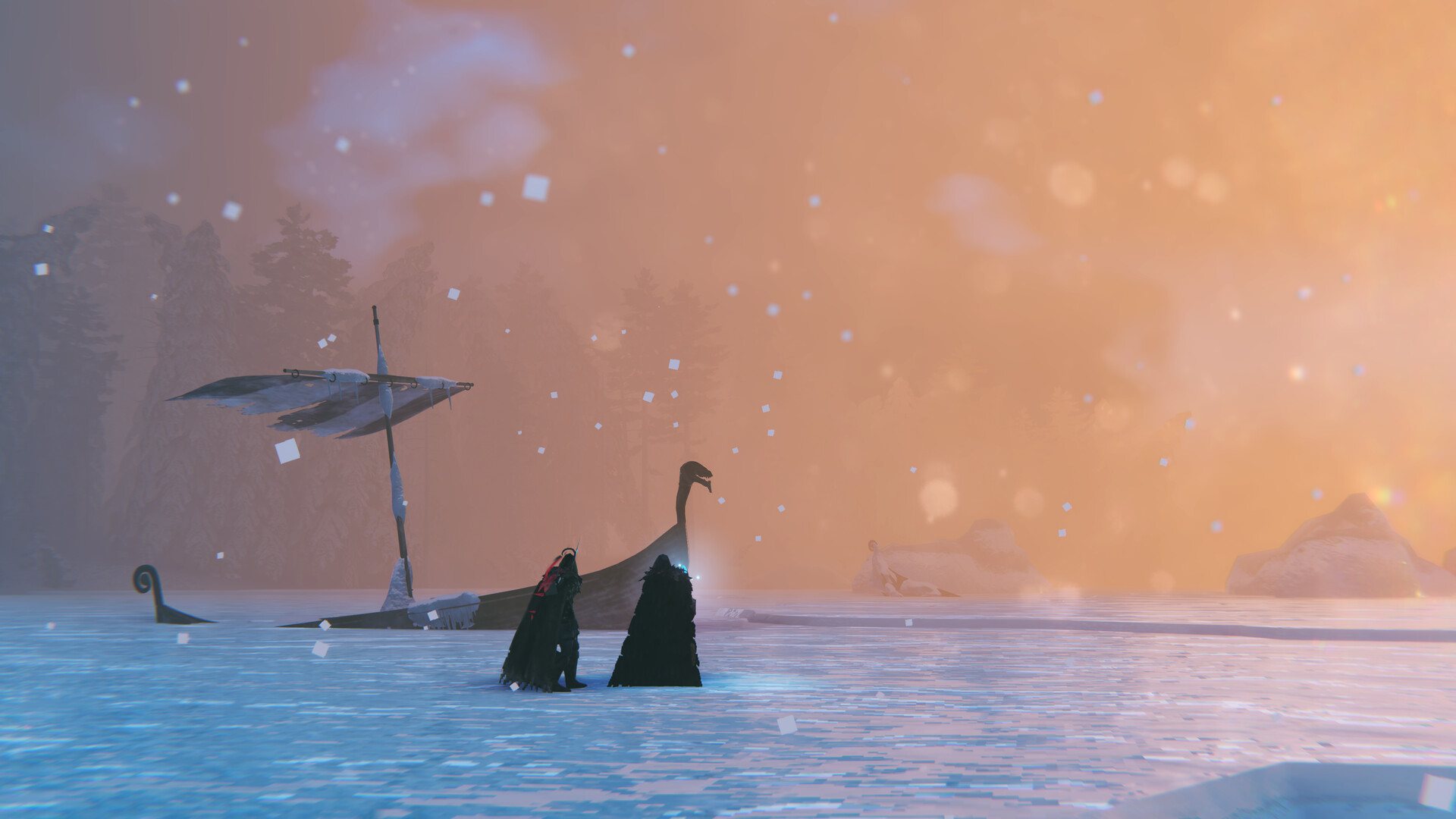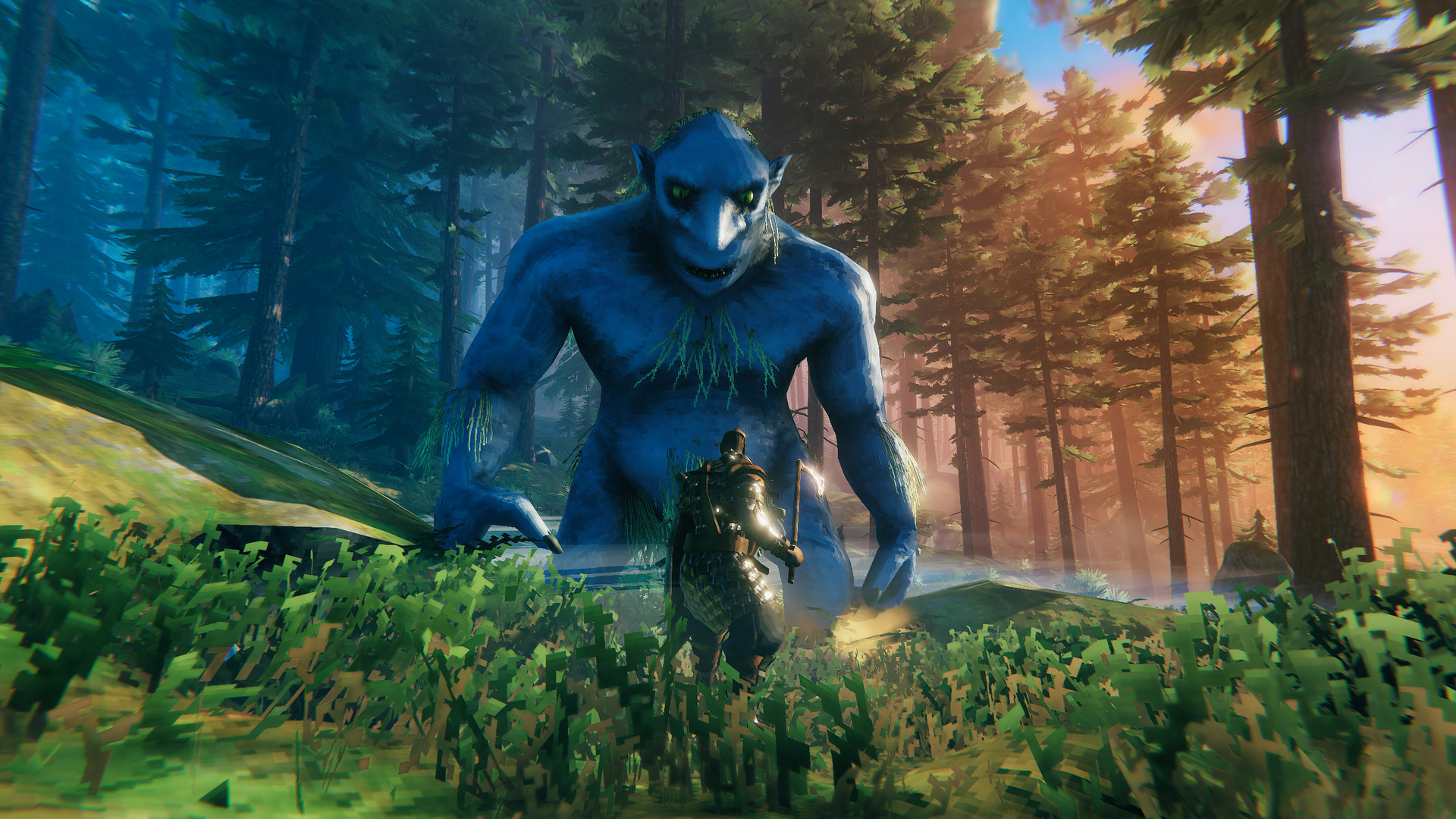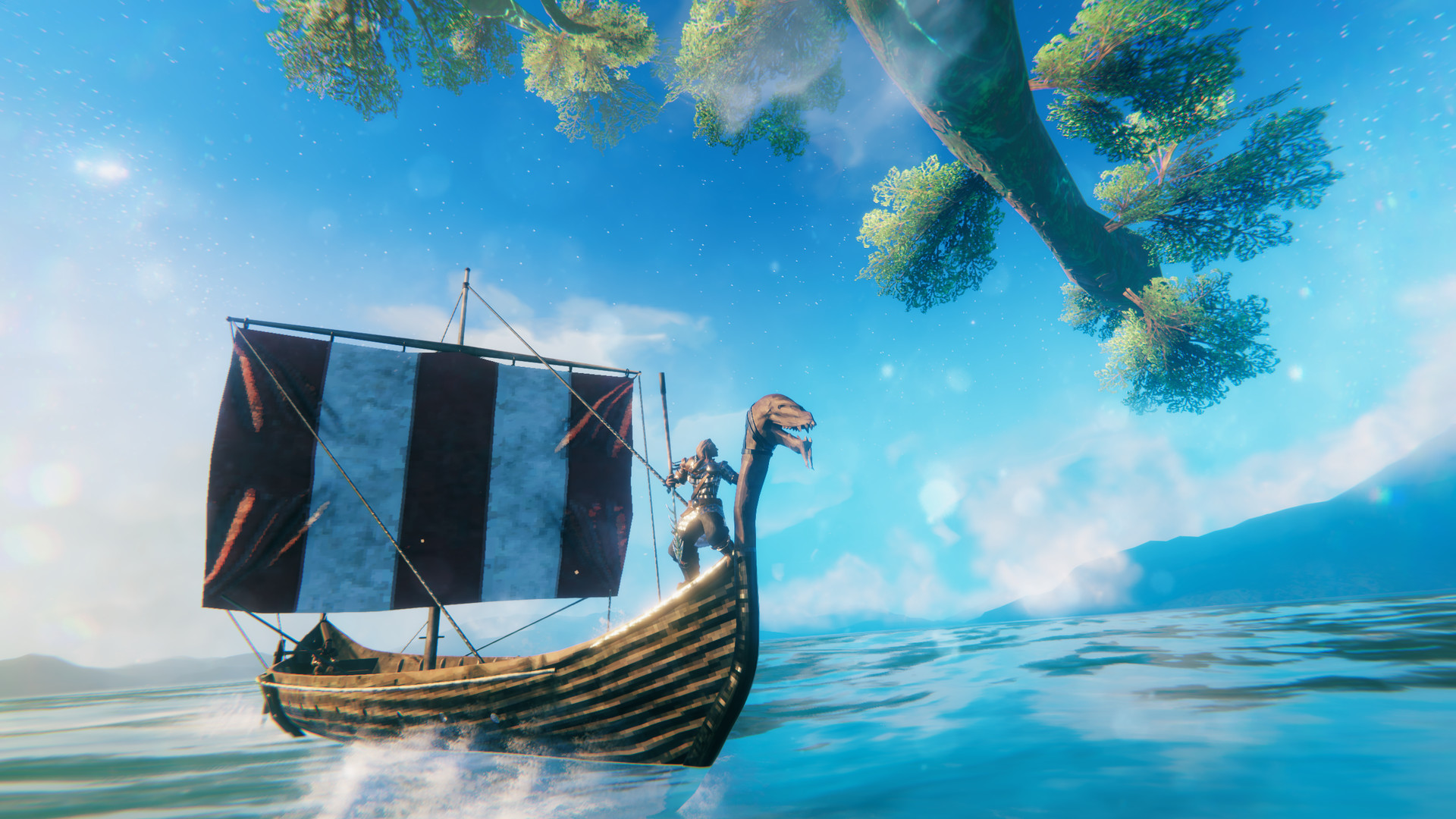
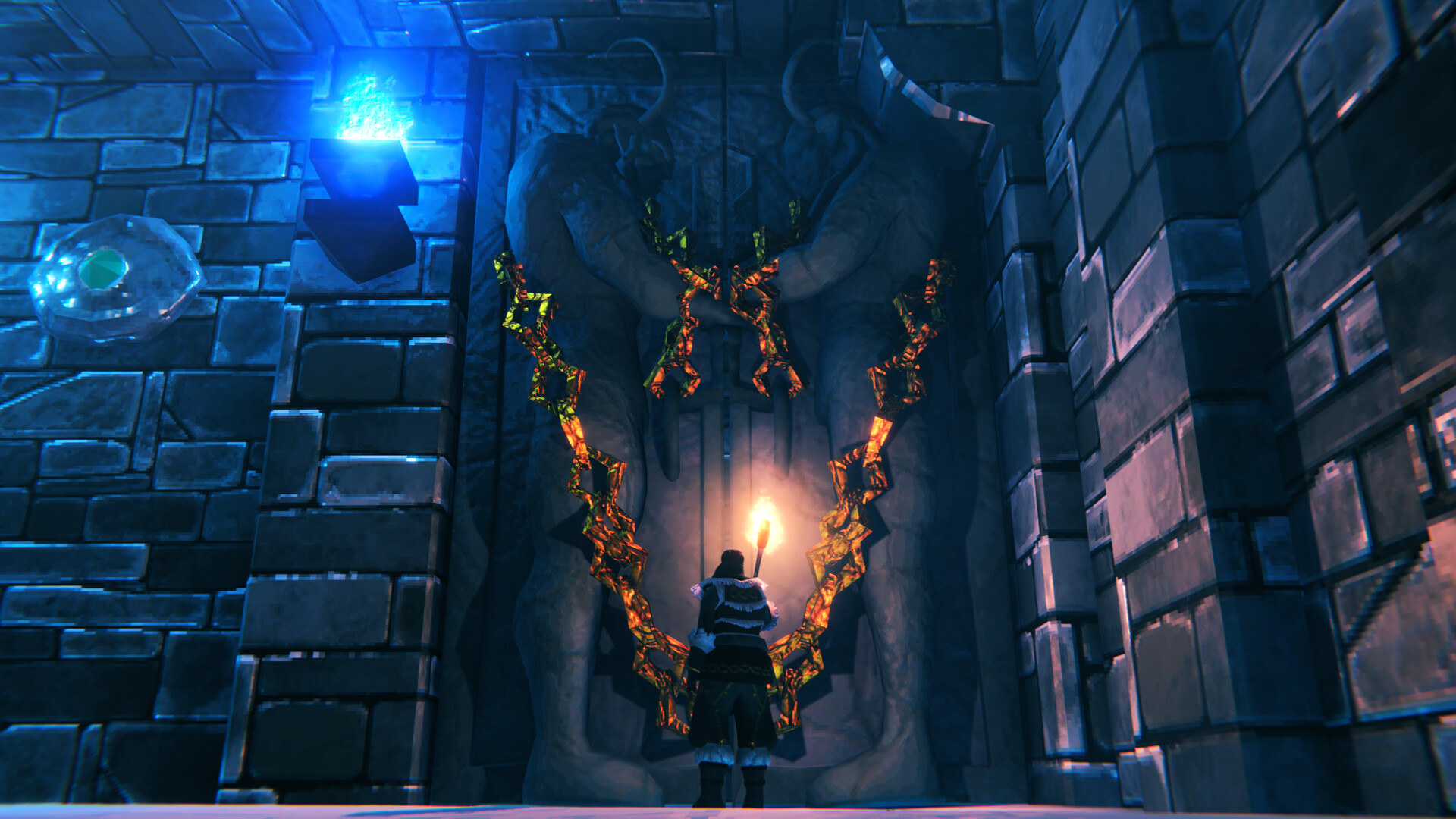
Valheim is a Viking survival game for 1 to 10 players by the Swedish studio Iron Gate. You wake in a procedurally generated afterlife, build a base, and push outward biome by biome, beating a boss in each one for the item that opens the next tier of materials. After more than five years in Early Access it reached version 1.0 on September 9, 2026, with the long-promised Deep North biome. New 1.0 names such as Kall Fimbulbringer stay in English, as they appear in the patch notes.
Buy, wait or skip: the short answer
| Your situation | Verdict | Why |
|---|---|---|
| You play with 2 to 10 friends | Buy | Co-op is where Valheim shines: shared bases, split chores and boss nights, with crossplay on every platform |
| You play mostly solo | Buy | Every boss and biome can be done alone. It is slower, and the late biomes are hard, but the game is balanced for it |
| You played in Early Access and stopped | Come back | 1.0 added the Deep North and much more for free. Iron Gate recommends a new world for the best experience |
| You hate hauling and inventory management | Think twice | Metal cannot pass through wooden portals. World modifiers can remove that rule, but the default game expects hauling |
| You want fast action combat and loot builds | Look at Enshrouded first | Valheim's combat is about stamina, blocking and preparation, not class builds |
| You need a guided story and quests | Skip | The story is told through runestones and the raven Hugin. Goals come from the boss chain, not from quests |
What kind of game it is
A typical session: you eat three foods, leave your base Rested, sail or walk to a new biome, gather what you need there, and bring it home to craft better gear. When the gear is ready, you find the boss altar with a Vegvisir runestone and summon the boss. Its drop opens the next tier: the Elder's Swamp key opens the crypts where iron is found, and Bonemass's Wishbone detects silver in the Mountains. The Boss Order guide lists the whole chain.
There are no levels. Your power comes from gear, food and skills that improve as you use them. Food is your health bar: you start with 25 health and 50 stamina, and three different foods raise both. You cannot starve, but fighting without food means fighting at 25 health. The Beginner Guide explains the first hours.
| Fact | Detail |
|---|---|
| Developer and publisher | Iron Gate AB / Coffee Stain Publishing |
| Status | Early Access from February 2, 2021. Version 1.0 released September 9, 2026 |
| Price tier | Mid-range indie price, raised at 1.0. Only a soundtrack DLC; no paid content or microtransactions |
| Players | 1 to 10 per world, with player-hosted or dedicated servers |
| Platforms | Steam (Windows, Linux, Mac), Microsoft Store, Xbox One, Xbox Series X|S, PlayStation 5, Nintendo Switch 2. Crossplay across all of them. Steam Deck Verified |
| Languages | 14 interface languages, including Japanese, Korean and both Simplified and Traditional Chinese |
| World | 9 biomes and 8 bosses at 1.0: Meadows, Black Forest, Swamp, Mountains, Plains, Ocean, Mistlands, Ashlands, Deep North |
| Steam user reviews | Very Positive, about 94% positive across more than 550,000 reviews |
What it does well
Pros
- +The boss chain gives every session a clear next goal
- +A food system that rewards preparation instead of punishing hunger
- +Building with structural support, weather and comfort
- +Co-op for 1 to 10 players with crossplay on every platform
- +World modifiers let each group tune the game
- +Distinctive lighting and an atmospheric soundtrack
Cons
- −Ores and metals cannot pass through wooden portals
- −The inventory starts small and grows late
- −The ocean is large and mostly empty
- −The late biomes are punishing solo
- −Large bases can hurt performance; 1.0 bugs are still being patched
The progression always tells you what to do next. Valheim locks bosses behind materials, not levels, so each biome asks a clear question: can you handle its threats with what you have? The Swamp needs Poison resistance and a blunt weapon for Bonemass, the Mountains need frost protection, and the Mistlands need a Wisplight to see through the fog. When a fight feels impossible, the answer is usually to craft what the biome is asking for. The Weapons and Armor guide shows what to craft at each stage.
Food and rest replace hunger. Instead of punishing you for not eating, Valheim rewards you for eating well. Three food slots, a Rested buff from a fire and a roof, and Comfort from furniture make a good kitchen and a cozy base matter in every fight. The Base and Food guide shows the best combinations by biome.
Building matters and is fun. Every piece needs a path back to the ground, so tall builds need grounded pillars and beams; rain wears down unprotected wood; a sealed room fills with smoke. These rules make building a puzzle rather than decoration. 1.0 added 80+ new build pieces, including steeper 67° roofs and drawbridges. See the Building guide for structural integrity.
Co-op without friction. Up to 10 players share a world, and since 1.0 PlayStation 5 and Nintendo Switch 2 players can join Steam and Xbox players. Splitting work, with one person farming, one mining, one building, cuts the grind.
It looks and sounds like nothing else. Low-resolution textures with modern lighting, fog, weather and sunsets give it a distinctive look, and the soundtrack carries much of the mood.
Where it falls short
Hauling is built in. Ores and smelted metals cannot pass through wooden portals, so every metal tier means sailing or carting it home. This is deliberate, because it makes the world matter, but it is the biggest source of grind. The Ashlands Stone portal finally allows metal, and the "Portal items" world modifier removes the rule for the whole world.
Inventory pressure. The inventory is 8 x 4, or 32 slots, with a carry weight of 300; the Megingjord belt adds 150. 1.0 added two purchasable pocket upgrades from the trader Haldor, each adding a row: Wider Pockets (1,000 coins, after Moder) and Deeper Pockets (2,000 coins, after the Queen). That helps, but only in the mid and late game.
The ocean is empty. It is huge, slow to cross and has few things to do. Iron Gate's 1.0 FAQ confirms that the Ocean did not get a dedicated update.
Performance and bugs. The FAQ also says large builds would not benefit much from 1.0's optimizations. Since launch, patches have fixed Deep North terrain changes reverting, and a fix for items wrongly marked as cheated was still planned at the time of writing.
Valheim 1.0: what has changed
1.0 is a big update, not just a new label. The official notes list the Deep North biome, the boss Kall Fimbulbringer, 40+ weapons, four armor sets, new food, 10+ creatures, a grappling hook, a snow shovel (snow must be cleared before you can build), rideable moose, a Jotun invasion event, upgrade idols for a hidden forge, alternate versions of earlier biomes at the edges of the world, upgradeable pockets and achievements. The save system was also rebuilt to save faster and survive interruptions.
| Update | Released | What it added |
|---|---|---|
| Hearth & Home | September 2021 | Food rebalanced so most foods favor health or stamina, reworked blocking, new building pieces and furniture |
| Frost Caves | March 2022 | Frost Cave dungeons in the Mountains, new enemies and the Fenris armor set |
| Mistlands | December 2022 | The Mistlands biome, the Queen, magic powered by eitr, the Wisplight |
| Hildir's Request | August 2023 | The trader Hildir, three new dungeon types and mini-bosses, world modifiers |
| Ashlands | May 2024 | The Ashlands biome, Fader, the Stone portal |
| The Bog Witch | October 2024 | Feasts, cooking, farming and crafting skills |
| Call to Arms | September 2025 | Trinkets and adrenaline, perfect dodge, bears and the Vile |
| 1.0 | September 2026 | The Deep North, Kall Fimbulbringer, PlayStation 5 and Nintendo Switch 2 versions, achievements |
Old worlds still work. Old saves load in 1.0, and new content appears in unexplored areas. Iron Gate still recommends starting a new world. Achievements only count actions made after 1.0, and using most cheat commands blocks them for that character and world.
Solo or co-op
| Group size | What it is like | Verdict |
|---|---|---|
| Solo | Quiet and slow. You do every job yourself, and the late biomes demand careful play | Very good, with patience |
| 2 to 4 players | One person can farm while others mine or build. Boss fights are easier to manage | Best balance |
| 5 to 10 players | A busy village with lots of building. Boss and enemy health rises with players nearby | Great for groups who like a shared project |
Creature health scales with the number of players nearby, so a group does not make bosses weaker, but it gives you someone to draw attention while others attack. A dedicated server keeps the world online when the host is away.
World modifiers: tune the game yourself
Since Hildir's Request, every world has modifiers. These answer most common complaints:
| Modifier | Range | Use it if |
|---|---|---|
| Combat | Very Easy to Very Hard (Very Easy: 50% enemy damage) | Boss fights block your group, or you want a challenge |
| Death penalty | Casual (keep equipped gear, 1% skill loss) to Hardcore (lose everything) | Corpse runs frustrate you, or you want risk |
| Resource rate | 0.5x to 3x | You want less grinding |
| Raids | None to Much more | Raids interrupt your building |
| Portals | All items, Normal, No boss portals, No portals | You want to skip hauling, or make travel harder |
Compared with similar games
| Game | Focus | Players | Status | Best for |
|---|---|---|---|---|
| Valheim | Boss-driven survival with food and logistics | 1-10 | 1.0 since September 2026 | Long co-op projects with clear goals |
| Enshrouded | Action RPG survival with classes, skills and voxel building | 1-16 | Early Access since January 2024, 1.0 announced for October 15, 2026 | Loot, combat builds and bigger groups |
| Sons of the Forest | Survival horror with free log building on a hand-made island | 1-8 | 1.0 since February 2024 | Horror and building with a companion |
| Minecraft | Open-ended sandbox with blocks | Varies by edition | Released | Pure creativity and freedom |
Enshrouded is the closest modern rival. It has more action and loot, classes and skill trees, and voxel building that lets you reshape terrain. Valheim is more about logistics, food and preparation. Sons of the Forest is darker and story-driven, with a companion, Kelvin; our Sons of the Forest review covers it. Minecraft is freer but has less structure; Valheim gives you goals.
Common complaints, and how true they are
"It's too grindy"
Partly true. The grind is mostly hauling metal and gathering for upgrades. Co-op shares it, the Stone portal ends it in the Ashlands, and the resource rate and portal modifiers cut it further.
"The inventory is too small"
True early on. 32 slots fill fast. Carts, ships, the Megingjord belt and, after 1.0, Haldor's pocket upgrades help. Build chests near portals and travel light.
"Bonemass is impossible"
Usually a weapon problem. Bonemass takes extra damage from blunt weapons and is immune to poison. Bring a mace and Poison resistance mead.
"The Mistlands are miserable"
Fair. The fog and Seekers are harsh. A Wisplight and Carapace gear help, and 1.0 increased the fog-clearing range of the Wisplight and added fog clearing to Mistlands weapons.
"Death costs too much"
On default settings you drop everything in a tombstone and lose 5% of skill levels. Keep a spare kit at home, or use the Casual death penalty modifier.
★Honest Take — the best-balanced survival game, now finished
Valheim's strength is how its parts fit: the boss chain gives direction, food makes preparation matter, building makes a base worth defending, and co-op makes all of it social. 1.0 finished the map. The weaknesses are real: hauling, a tight inventory and an empty ocean. But they are design choices, and world modifiers let you change them. If you want a long survival project, alone or with friends, Valheim is still the one to beat.