The verdict up front
Field of Glory II: Medieval is the best game of medieval battles on PC, and it earns that the same way its ancient predecessor did — through the quality of its tactical model, now turned to the High Middle Ages. Developed by Byzantine Games (the studio of veteran designer Richard Bodley Scott) and published by Slitherine, it takes the acclaimed Field of Glory II engine and moves it to roughly 1040 to 1270, the age of the mounted knight. You command feudal European and eastern armies — thundering knightly lancers, plated men-at-arms, English longbowmen, crossbowmen, spearmen and pikemen — and the battles capture something essential about the era: the dominance of the heavy cavalry charge, and the slow, decisive rise of massed missile infantry to answer it. It holds a Very Positive rating on Steam, and among medieval wargames it is close to the genre standard.
So is it worth buying? If you love tactical wargames and the medieval world, very much so — the combat is deep yet learnable, the AI is genuinely good, and the multiplayer is superb. The honest caveats are the same as the ancient game's: this is a niche, focused wargame with plain presentation and a lot of optional DLC, and you do need to learn how medieval troop types beat one another. None of that undermines a tactical experience few games match.
Field of Glory II: Medieval is a turn-based tactical wargame from Byzantine Games, published by Slitherine. It covers High Middle Ages warfare (the base game spans roughly 1040–1270), with DLC widening the armies and periods. It uses the same engine as the ancient Field of Glory II, and offers single-player campaigns, custom battles and asynchronous multiplayer.
What you actually do
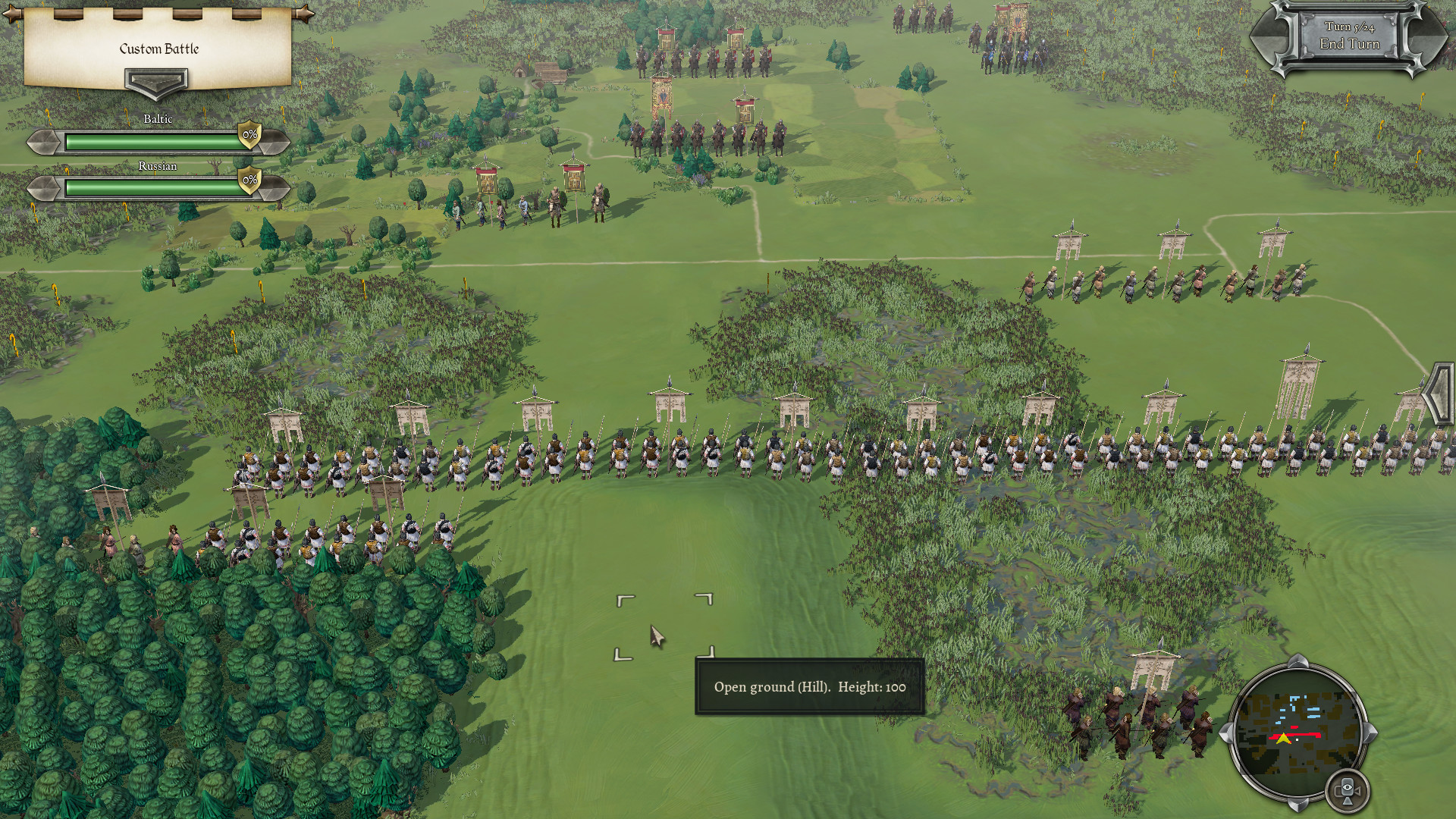
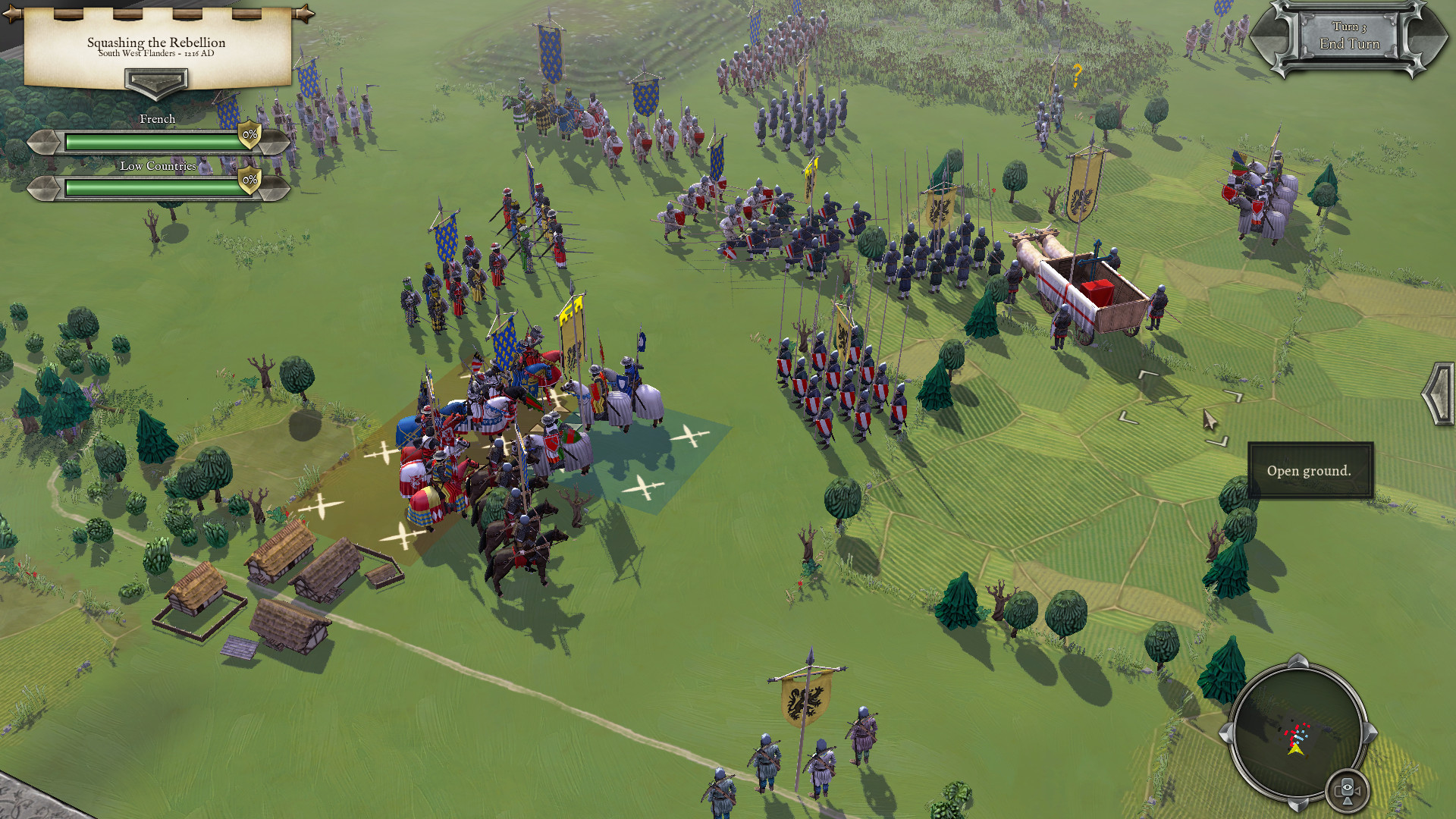
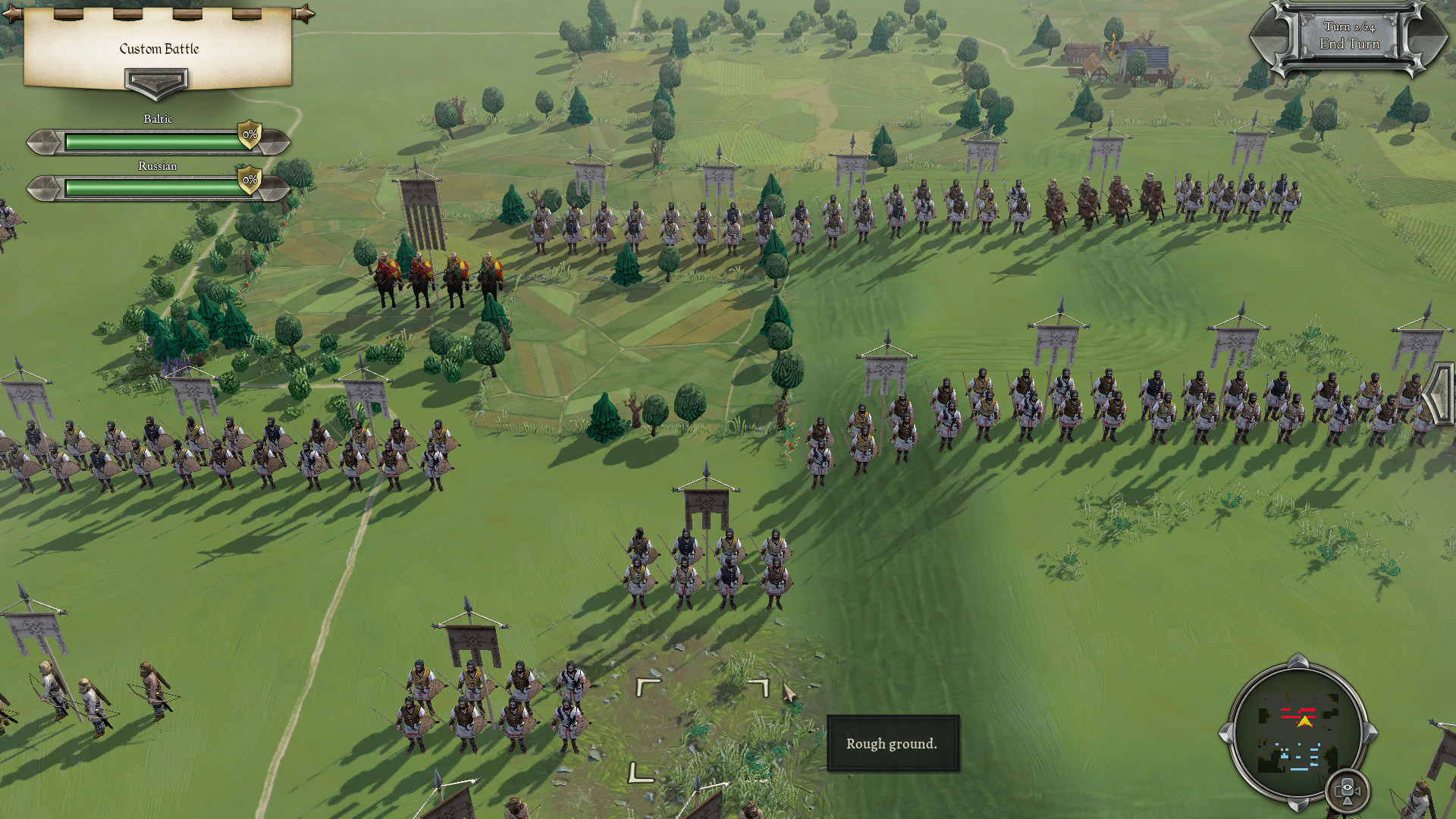
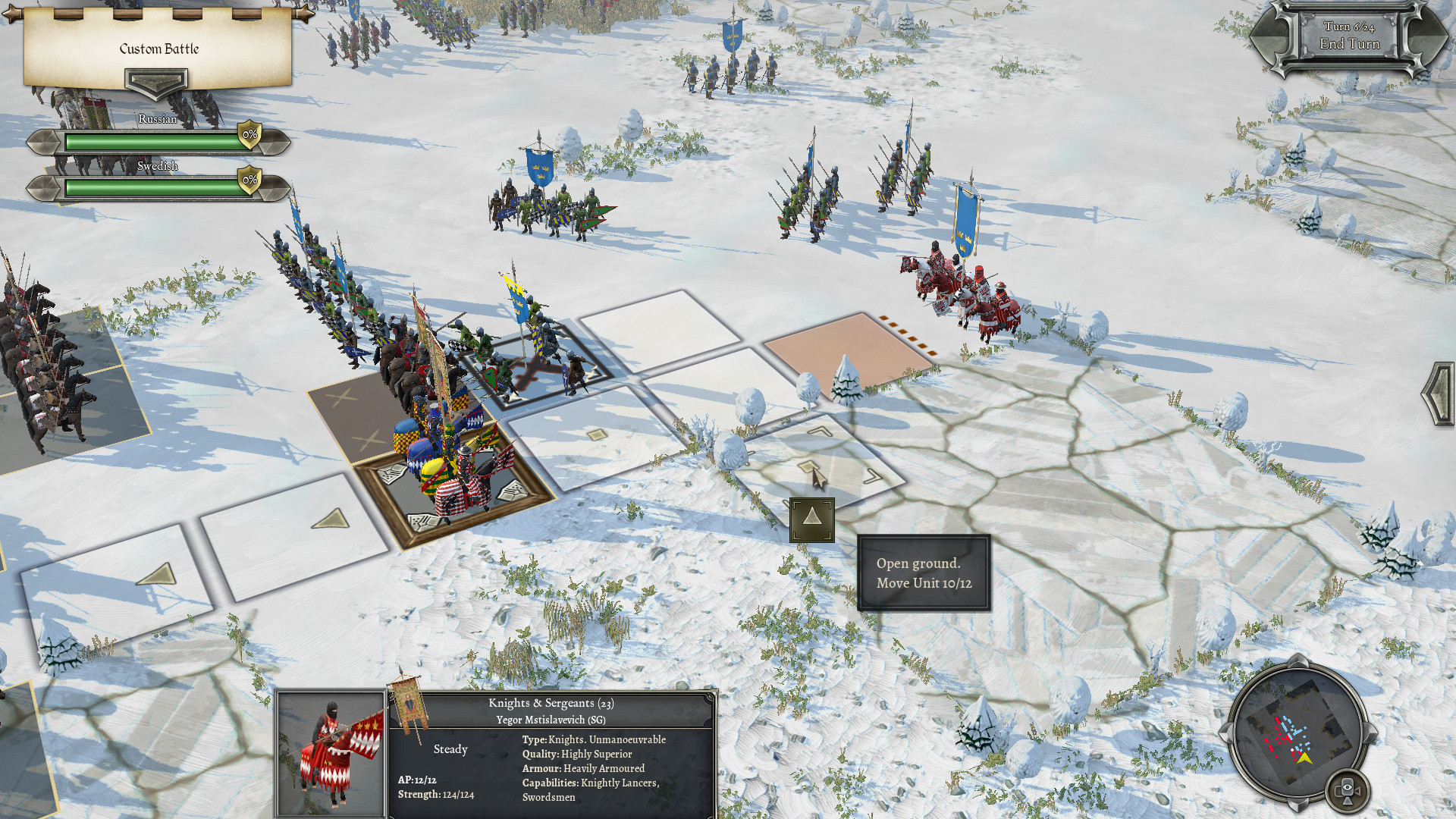
A game of Field of Glory II: Medieval is a single battle, fought turn by turn between two medieval armies. You deploy your forces — a line of foot men-at-arms and spearmen, knights and mounted men-at-arms on the wings, longbowmen or crossbowmen to shoot — then maneuver across a battlefield of open ground, hills and woods, trying to engage on your terms. Combat resolves in two stages whenever units clash: an impact phase when they charge into contact, then ongoing melee for as long as they stay locked together, with knights at their most lethal in that first crashing charge. The interface shows your odds clearly before you commit, so you make informed decisions rather than blind gambles. As ever, the goal is not annihilation but morale collapse: break enough enemy units and the whole army routs.
Around those battles sits a generous amount of content — historical and what-if campaigns, a flexible custom-battle mode pitting almost any two medieval armies against each other, set-piece scenarios, a sandbox generator and a map editor. With dozens of feudal and eastern army lists, the variety of matchups is enormous, and that variety is a big part of why the game lasts.
New to the engine? Start with the in-game tutorials and a balanced feudal army before experimenting with longbow-heavy or knight-heavy forces. Our Field of Glory II: Medieval beginner guide walks you through your first battles.
Why the medieval combat carries it
What sets Field of Glory II: Medieval apart is how thoughtfully its battles model the High Middle Ages. The foundation, as in the ancient game, is cohesion — effectively a unit's morale and order. Units do not usually fight to the last; instead, losses, being charged, fighting in bad terrain, or being struck in the flank or rear erode their cohesion in steps until they break and rout. What makes the medieval game feel distinct is the troops layered on top. The knightly lancer is the flagship unit, devastating on the charge — in a cavalry clash, knights hold a huge advantage at impact over lesser horse, and they crush most infantry caught in the open. This makes the heavy cavalry charge the dominant force of the early battlefield, exactly as it was historically.
But the era's other great story is the answer to the knight, and the game models it beautifully. Massed longbowmen and crossbowmen can shoot down armoured cavalry and infantry, and the English combination of longbows with dismounted men-at-arms came to dominate western battlefields — a shift from cavalry supremacy toward trained ranged infantry that you feel directly in play. Add pikemen, spearmen and light troops, and you get a rich rock-paper-scissors: knights smash the open field, bows and flanking answer the knights, terrain and spears blunt the cavalry, and the "points of advantage" system tallies it all into clear odds. Learning to balance your knights and your archers, and to fight on the right ground, is the heart of the game. Our combat guide and troop types tier list go deeper.
Pros
- +Authentic medieval warfare with knights, longbows and feudal armies.
- +Deep yet learnable tactical combat built on morale and matchups.
- +Strong, sensible AI that makes single-player genuinely challenging.
- +Excellent asynchronous play-by-email multiplayer with a healthy community.
Cons
- −A niche tactical wargame with a real learning curve for its nuance.
- −Plain, functional 3D presentation that looks dated next to mainstream strategy.
- −A long list of paid DLC to expand eras, armies and campaigns.
- −English, French, German and Spanish only — no Japanese, Korean or Chinese.
AI, multiplayer and longevity
Like the ancient game, Medieval has exceptional staying power, and for the same two reasons. Its AI is among the best in the tactical wargame genre: it maneuvers with real purpose — refusing flanks, exploiting terrain, committing reserves, going for your weak points — so single-player battles are a genuine contest rather than a scripted walkover, and the sheer number of medieval army matchups keeps it throwing fresh problems at you. Its multiplayer is equally strong, built on Slitherine's asynchronous play-by-email system, so you can run many games at once against opponents worldwide, taking each turn when it suits you, with no need to be online together. Combined with carefully balanced army lists, that makes for a deep, enduring competitive scene, and there is hotseat play for local opponents too.
Between a strong AI, superb asynchronous multiplayer, dozens of armies and a battle generator, the game offers effectively endless tactical variety. For a focused wargame, the longevity is outstanding — this is a title medieval-warfare fans return to for years.
The honest weaknesses
The caveats are, frankly, the same as the ancient game's, and you should buy knowing them. This is first and foremost a niche tactical wargame: no grand campaign of conquest, no economy, no real-time spectacle — just battles, played turn by turn. The presentation reflects that focus; the 3D battlefield is clear and functional but plain, and it looks dated beside mainstream strategy games, so anyone shopping for visual spectacle will be underwhelmed. There is a learning curve too — not brutal, but you must absorb how the medieval troop types and terrain interact to play well. And like most Slitherine wargames, it has a long list of paid DLC adding armies, periods and campaigns, which adds up if you want everything. It is also English, French, German and Spanish only, and fairly text-heavy, a barrier for players outside those languages.
None of this is a design flaw so much as a statement of what the game is. It spends its effort on tactical depth and historical authenticity rather than polish or accessibility, and that is the trade you are making.
Buy Field of Glory II: Medieval for its tactical depth, medieval authenticity and excellent AI and multiplayer, not for graphics or a casual experience. If you want spectacle or a story-driven strategy game, look elsewhere. If you want the finest game of medieval battles on PC, this is it.
Who should buy it
If you love tactical wargames, medieval warfare, or both, Field of Glory II: Medieval is close to essential — a deep, precise, endlessly replayable game of knights, longbows and feudal armies, with an AI and multiplayer scene few rivals can match. Fans of troop matchups, morale-driven combat and the drama of the heavy cavalry charge meeting the massed bow will find more to chew on here than in almost any comparable title, and at its price the value is strong even before any DLC. To get started, read our beginner guide, then dig into the combat guide, troop types tier list and tactics guide. If you prefer ancient warfare, the original Field of Glory II covers Rome, Carthage and the classical world.
Who should pass? Anyone wanting a visually spectacular, casual or story-driven strategy game, or who has no interest in learning how medieval troop types and terrain interact. Be honest about that, because the game asks for a little study. For the players it suits — tacticians and medieval-history buffs — it is one of the most rewarding wargames on PC, with the honest asterisks that it is niche, plain to look at, and surrounded by a lot of DLC.