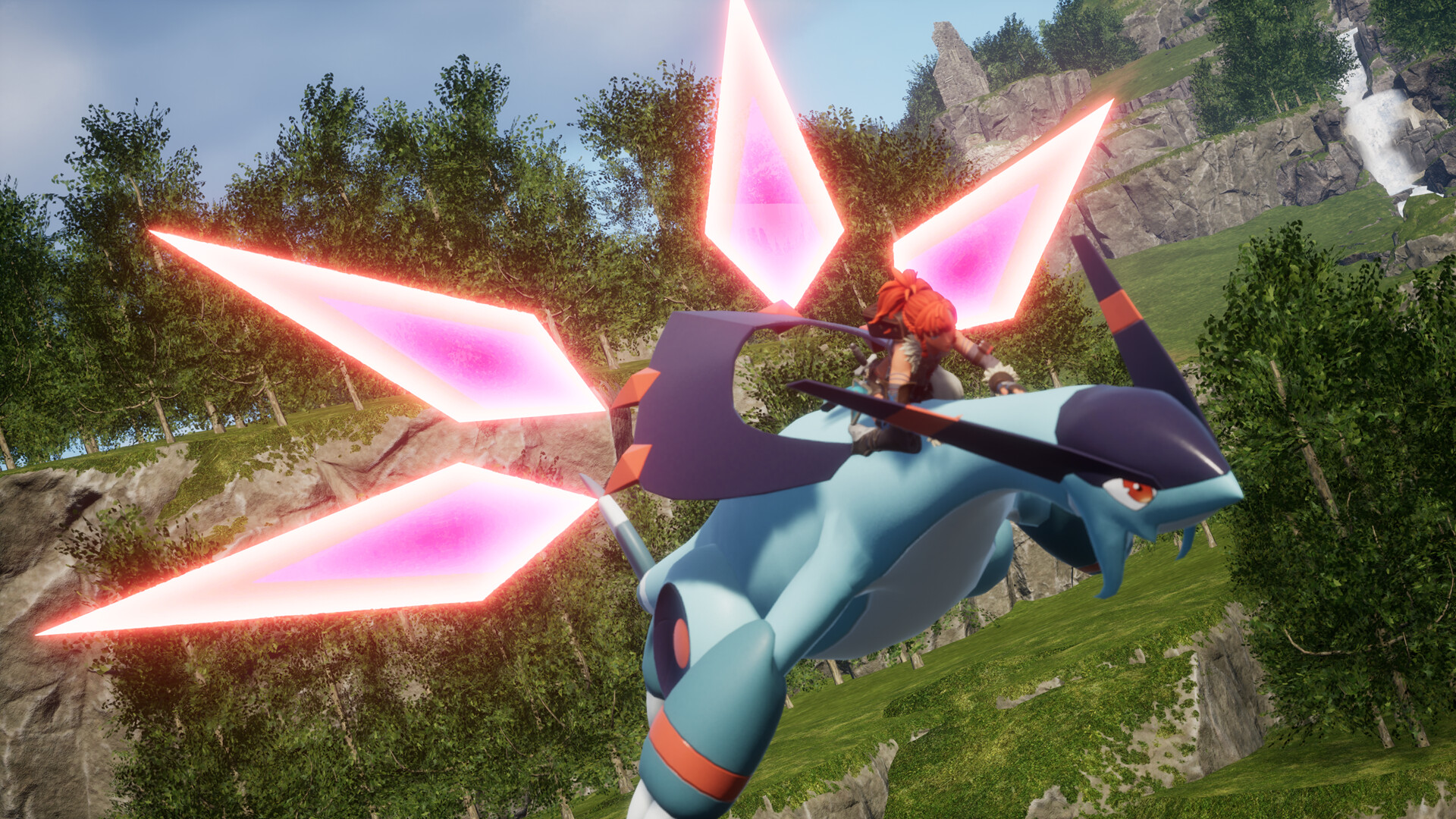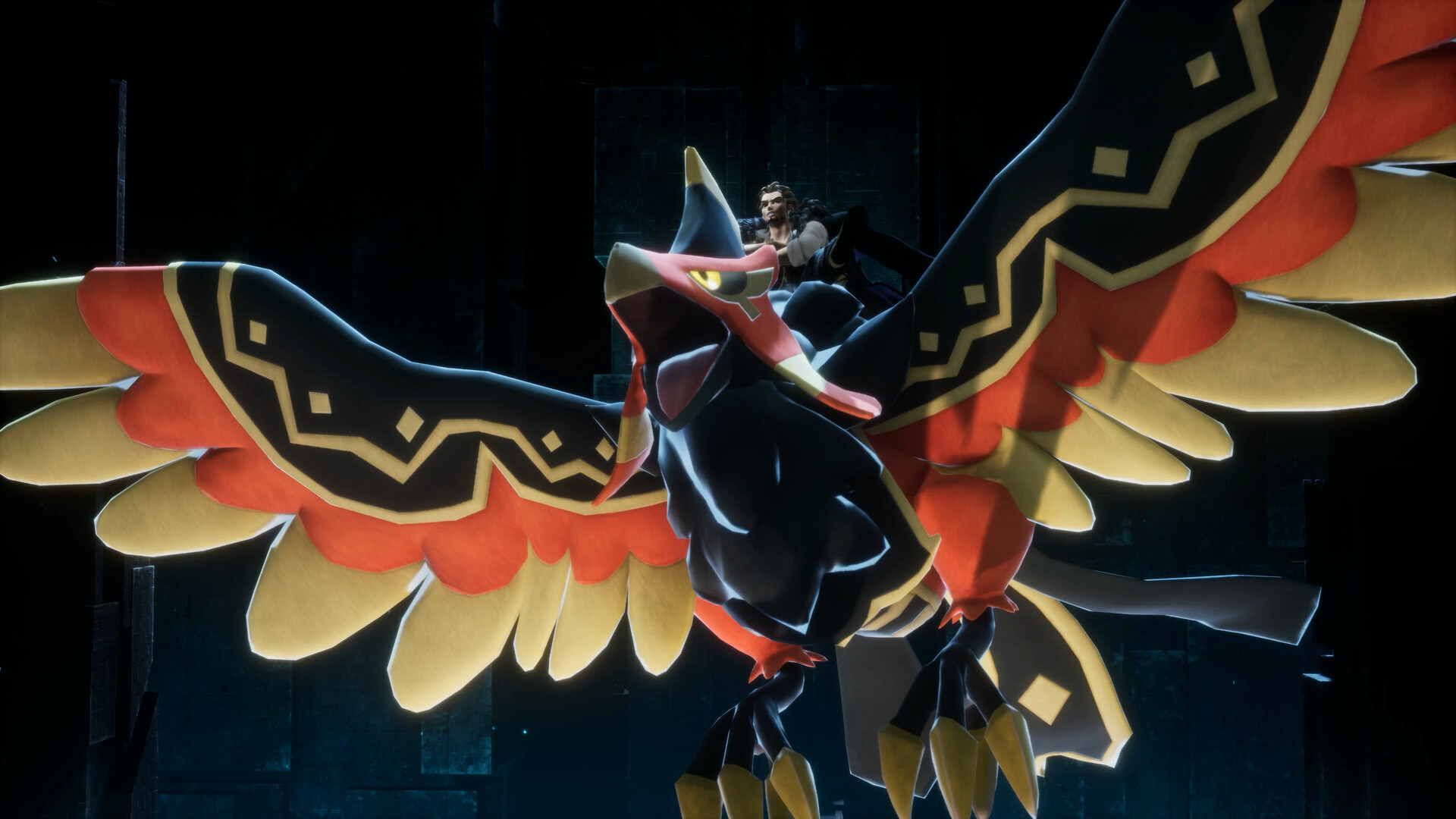
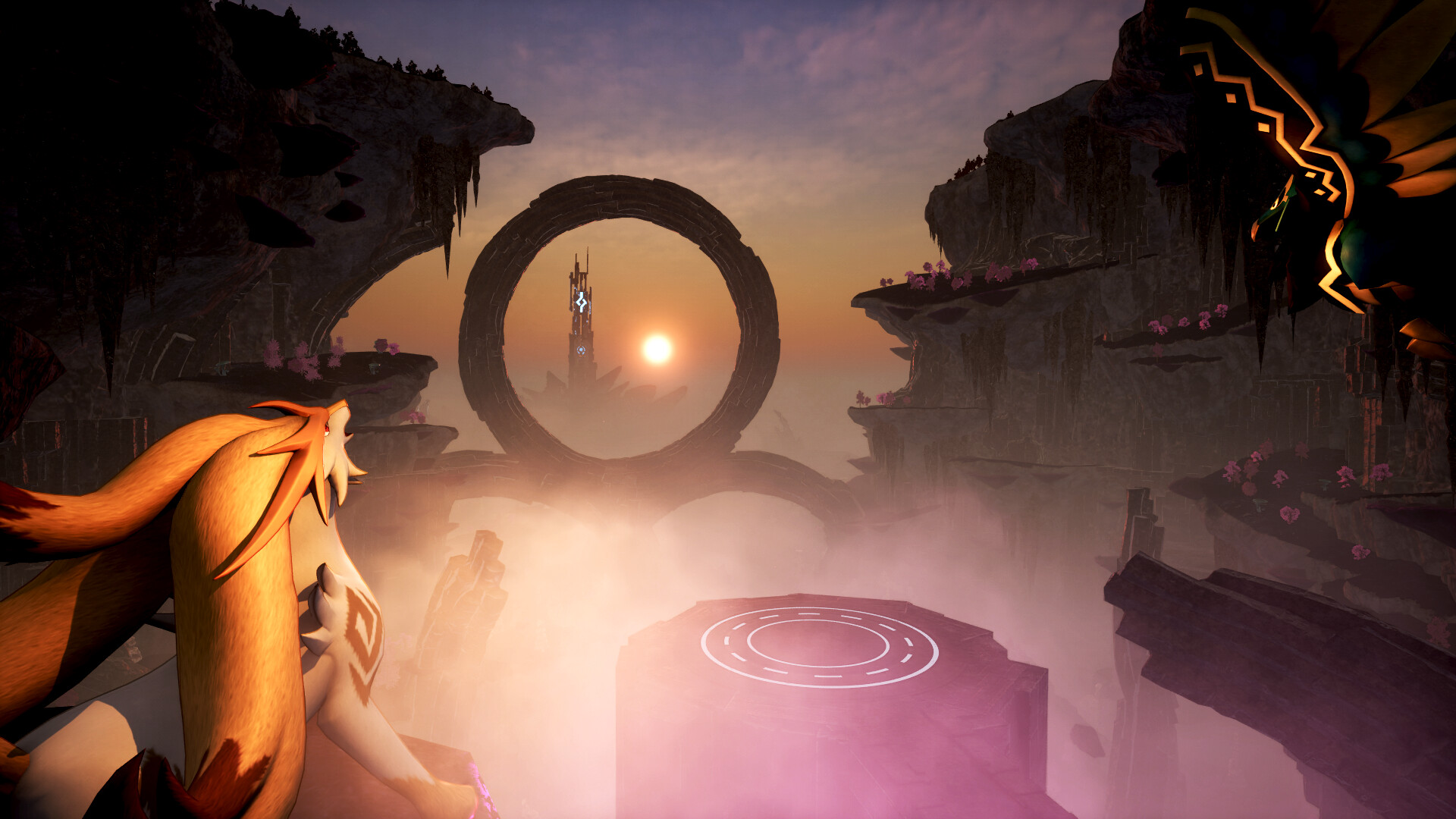
Palworld became famous for the wrong reason: a trailer of cute creatures holding guns, and a wave of "Pokémon clone" headlines. Underneath that is a survival crafting game with one idea most of the genre lacks. The creatures you catch do real work. They chop trees, mine ore, cook, craft and haul while you are away, and that changes how the whole game feels. With version 1.0 out, the question is no longer whether Early Access will deliver, but whether this loop suits you.
The short answer: buy, wait or skip
| Your situation | Verdict | Why |
|---|---|---|
| You enjoy survival crafting (ARK, Valheim, Minecraft) | Buy | The catch-work-breed loop adds a layer the genre rarely has, and 1.0 is a complete game |
| You want a group game for 2-4 friends | Buy | Co-op by invite code is easy, and a dedicated server takes up to 32 players with cross-play |
| You love collecting and optimising creatures | Buy | Breeding has clear rules and real depth for stacking passive skills |
| You played in Early Access and stopped | Come back | 1.0 reworked the story, partner skills, raids and work levels, and added a new endgame |
| You want a story-led creature RPG like Pokémon | Skip | The story is a thin frame; the systems are the point |
| You dislike grinding and base management | Skip | The late game is built on breeding for passives and keeping several bases running |
What kind of game it is
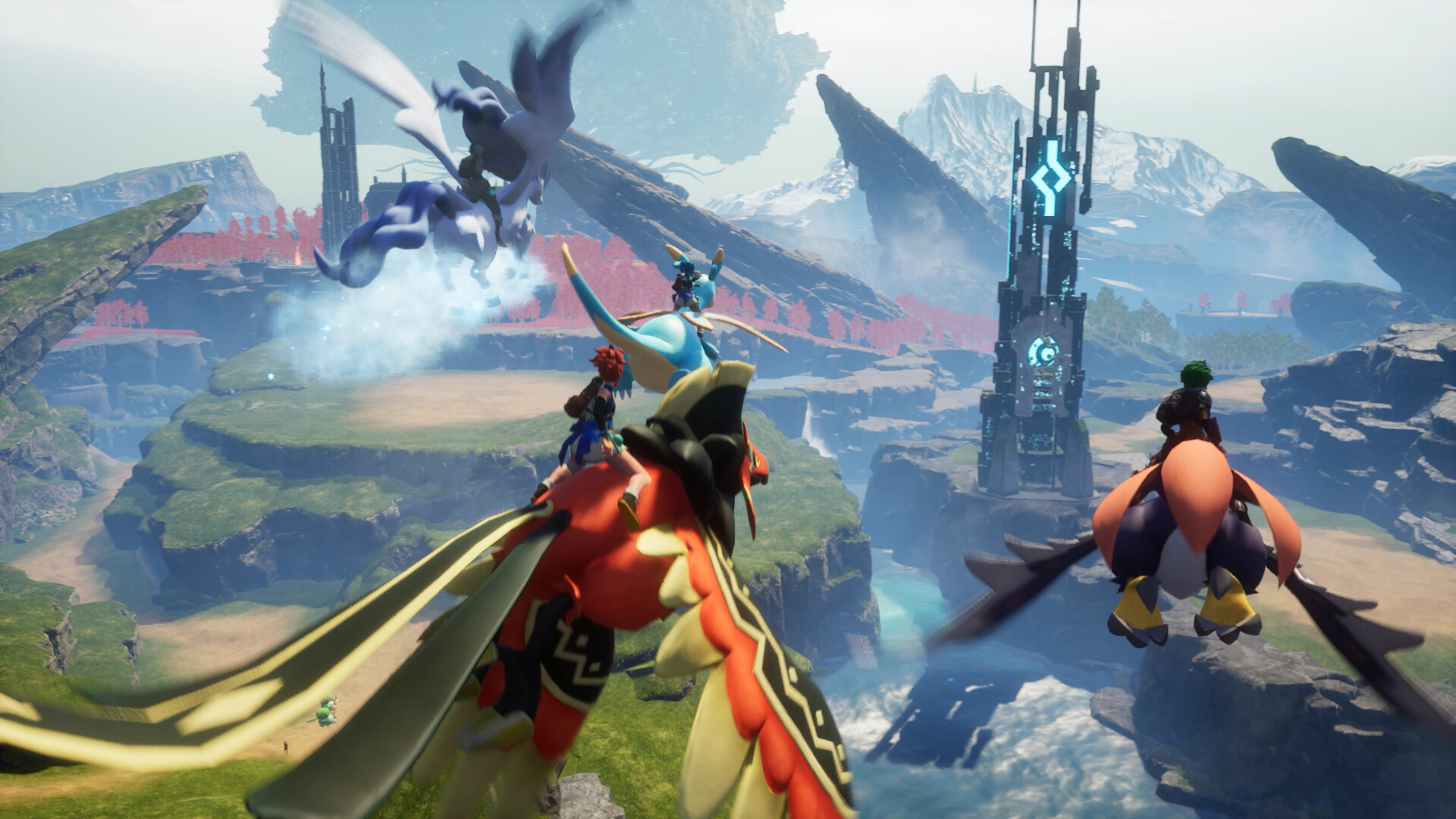
Palworld is an open-world survival crafting game played in real time, alone or with friends. You gather and craft like in any survival game, but you also weaken wild creatures, called Pals, and catch them with Pal Spheres. Pals fight beside you, become mounts, and, most importantly, live at your base and work according to their work suitabilities.
A typical session looks like this: leave the base with empty chests, explore, catch new species and fight an Alpha Pal or a tower boss, then come back to ingots, spheres and food your Pals produced. Later you breed Pals at a Breeding Farm to get better workers and fighters. The Beginner Guide shows how the first 20 levels play out.
Current state: 1.0 and what changed
Palworld entered Early Access on Steam and Xbox in January 2024 and left it with version 1.0 in July 2026, followed by balance patches. Along the way it reached PlayStation 5 (September 2024) and Mac (March 2025).
| Update | When | What it added |
|---|---|---|
| Sakurajima (v0.3.1) | June 2024 | Sakurajima island, 14 new Pals and 10 variants, the Blazamut Ryu raid and a player arena |
| Feybreak (v0.4.11) | December 2024 | Feybreak island, 13 new Pals and 9 variants, the Xenolord raid, Expeditions, Research and Hardcore Mode |
| Crossplay (v0.5.0) | March 2025 | Cross-play across all platforms and the Global Palbox for moving Pals between worlds |
| Tides of Terraria (v0.6.0) | June 2025 | A Terraria crossover with a dungeon, crossover gear and Moon Lord |
| Home Sweet Home (v0.7.0) | December 2025 | 48 new building parts, melee combos, the Hartalis raid, experimental PvP and Steam Workshop mods on PC |
| 1.0 | July 2026 | Sunreach and the World Tree, 47 new Pals and 25 variants, a reworked story, Awakening and Mutation, level cap 80 |
Version 1.0 changed more than the content count suggests. Over 200 Pals had their partner skills reworked, work suitability now goes up to level 10, raids come in waves and can be paid off with the Negotiator, the capture bonus completes after 5 captures instead of 12, tower boss fights have a 5-minute limit, and on Normal difficulty you no longer drop your equipped items when you die. The Wing Pack glider lets you fly without a Pal. Many older guides predate these changes, which is why our guides are written against the 1.0 data.
What it does well
Pros
- +Pals work, so every new species has a practical use at the base
- +Base automation across up to four bases is the most satisfying loop of its kind
- +Breeding is deterministic, so effort turns into results
- +1.0 added a real endgame and finished the story
- +Multiplayer scales from 4-player co-op to 32-player servers, with cross-play
- +Indie price with no paid gameplay content
Cons
- −Pal pathfinding still breaks on stairs, slopes and cramped bases
- −The late game is mostly breeding and passive-skill grinding
- −The story and characters are thin next to the systems
- −Key systems such as work priority and sanity are badly explained
Pals that work change the genre
In most survival games, creatures are mounts or pets. In Palworld a Pal's value is its work: Handiwork, Kindling, Watering, Mining, Transporting and more. Catching a Foxparks early matters because your furnace needs a Kindling Pal; breeding an Anubis matters because it crafts and mines at a high level. That gives collecting a purpose beyond filling the Paldeck. The Automation Guide lists the best worker for each job.
Coming home to full chests
A well-run base turns stone into Paldium, wheat into flour and ore into ingots while you explore. In 1.0 you can run four bases, unlocked at base levels 8, 15 and 25, so a mining base and a farm can feed your main base. You still queue crafts yourself and Pals never move materials from one station into another, so it is managing a workforce rather than building a factory. Within that limit it is deeply satisfying. Layout and sanity are covered in the Base Building Guide.
Breeding with rules you can learn
The child's species follows a fixed formula based on the parents' breeding ranks, and passive skills come from both parents with known odds. A plan, not luck, gets you a Pal with four ideal passives. The Breeding Guide explains the formula and the odds.
Combat with more variety after 1.0
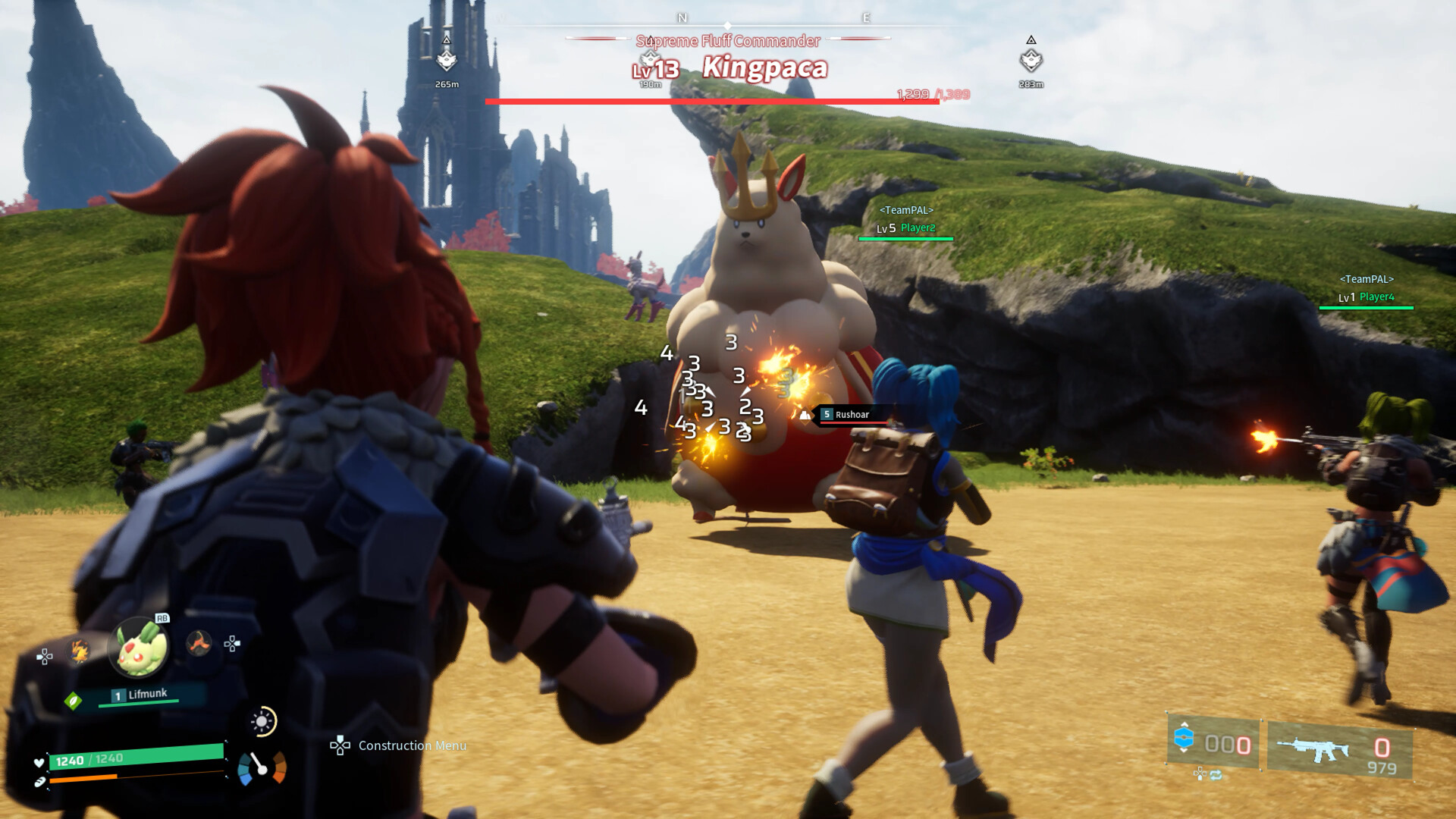
You fight with your own weapons while your Pals use active skills, and partner skills let some Pals become guns, shields or buffs. 1.0 made those partner skills matter far more, so a balanced team of several elements beats six copies of one strong Pal. The Strongest Pal Tier List ranks them by role.
Where it falls short
Pal pathfinding is still the most common frustration. Workers get stuck on stairs, slopes and between tightly packed stations, which looks like laziness. Building flat and compact solves most of it, but you have to learn that yourself.
- The late game is a grind. Once you have the strong species, progress means breeding for passive skills and levelling Pals for level 60-80 Alphas and raids. If optimisation is not your hobby, the game thins out after the story.
- The story is a frame. 1.0 reworked the main missions and gave the World Tree a narrative role, but you will not remember the characters. The world is built for exploring, not storytelling.
- Poor explanations. The game never shows the work priority that makes a Pal ignore the job you gave it, and sanity, capture power and Ancient Technology Points get one sentence each.
- The tone is uneven. Cute creatures with assault rifles and a cleaver for butchering Pals are deliberate dark humour. Some find it funny; others find it uncomfortable.
Multiplayer and server options
| Mode | Players | Best for | Caveat |
|---|---|---|---|
| Single player | 1 | Playing at your own pace, with world settings you can tune | Breeding and multiple bases take longer alone |
| Co-op by invite code | Up to 4 | Friends playing together in sessions | The world lives on the host's machine, so others join only while the host plays |
| Dedicated server | Up to 32 | Groups that want a world online all the time | You run or rent a server and manage its settings |
Cross-play has covered Steam, Xbox, PlayStation 5 and Mac since the v0.5.0 update, and the Global Palbox lets you move Pals between worlds. In single player and on dedicated servers you can change world settings, including turning raids off. Player-versus-player play is limited to an arena (since Sakurajima) and an experimental PvP mode (since v0.7.0), so treat Palworld as a co-op game first.
How it compares with similar games
| Game | What it shares with Palworld | Where it differs |
|---|---|---|
| Pokémon | Catching creatures with a thrown ball, elemental types, collecting | Turn-based battles, no survival or base building, a stronger story, Nintendo platforms only |
| ARK | Open-world survival, taming creatures, riding them, server play | Taming is slower, survival is harsher, and creatures do far less base work |
| Valheim | Co-op survival crafting, building, boss progression | Up to 10 players per server, almost no creature collection, a stronger focus on exploration and building |
The short version: if you want Pokémon, Palworld is not a substitute. If you like ARK or Valheim and wished your creatures did more than fight, Palworld is the game that answers that. For the Valheim side of the comparison, see our Valheim review.
Common complaints and the reality
| Complaint | The reality |
|---|---|
| It is a Pokémon clone | The catching borrows from Pokémon and some designs invite the comparison, but the game is survival crafting with base automation |
| It is an unfinished Early Access game | Out of date: 1.0 released in July 2026 with a finished story and a new endgame |
| Pals get stuck and stop working | Still true on uneven ground; flat, compact bases and the Monitoring Stand fix most of it |
| There is nothing to do after the story | Partly true: the endgame is raids, Alphas up to level 80 and breeding. Fine if you enjoy optimising, thin if you do not |
| Raids wreck your base | 1.0 reworked them into waves, added the Negotiator to pay one off, and they can be disabled in world settings |
| Dying loses all your gear | Since 1.0 you keep equipped items on Normal difficulty |
The Nintendo lawsuit, briefly
In September 2024, Nintendo and The Pokémon Company filed a patent infringement suit against Pocketpair in the Tokyo District Court. Pocketpair later said that two changes were made because of the case: since v0.3.11 Pals are summoned beside you instead of by throwing a Pal Sphere, and since v0.5.5 gliding needs a glider rather than a Pal. Neither change hurts the game much. We do not speculate on the outcome; for a buyer, the practical point is that the game remains on sale.
Facts at a glance
| Item | Detail |
|---|---|
| Developer and publisher | Pocketpair |
| Status | Full release (1.0, July 2026); Early Access from January 2024 |
| Platforms | PC (Steam, Microsoft Store), Xbox, PlayStation 5, Mac |
| Price | Indie price range, no paid gameplay DLC |
| Players | Single player, 4-player co-op, up to 32 on dedicated servers, cross-play |
| Mods | Steam Workshop support on PC since v0.7.0 |
Related guides
- Beginner Guide — the first 20 levels, early Pals and the first base
- Base Building Guide — base levels, layout, sanity and raids in 1.0
- Automation Guide — the best worker for every job and the production chains
- Breeding Guide — the species formula and passive inheritance odds
- Strongest Pal Tier List — the best Pals for combat, work and travel
★Honest Take: the best creature-worker game, not the best creature RPG
Palworld deserves its success for a reason the headlines missed. Putting creatures to work makes collecting useful, makes base building feel alive and makes coming home the best moment of a session. Version 1.0 turned a promising Early Access game into a complete one, with a real finale, a reworked story and fairer rules, and the multiplayer options are generous for the price. The weaknesses have not gone away: Pals still trip over stairs, the game hides its own rules, and after the story the progress is breeding for passives. If that sounds like a hobby, Palworld will take hundreds of hours. If it sounds like a chore, the story and the first tower bosses are still worth the price, and you can stop there with no regrets.