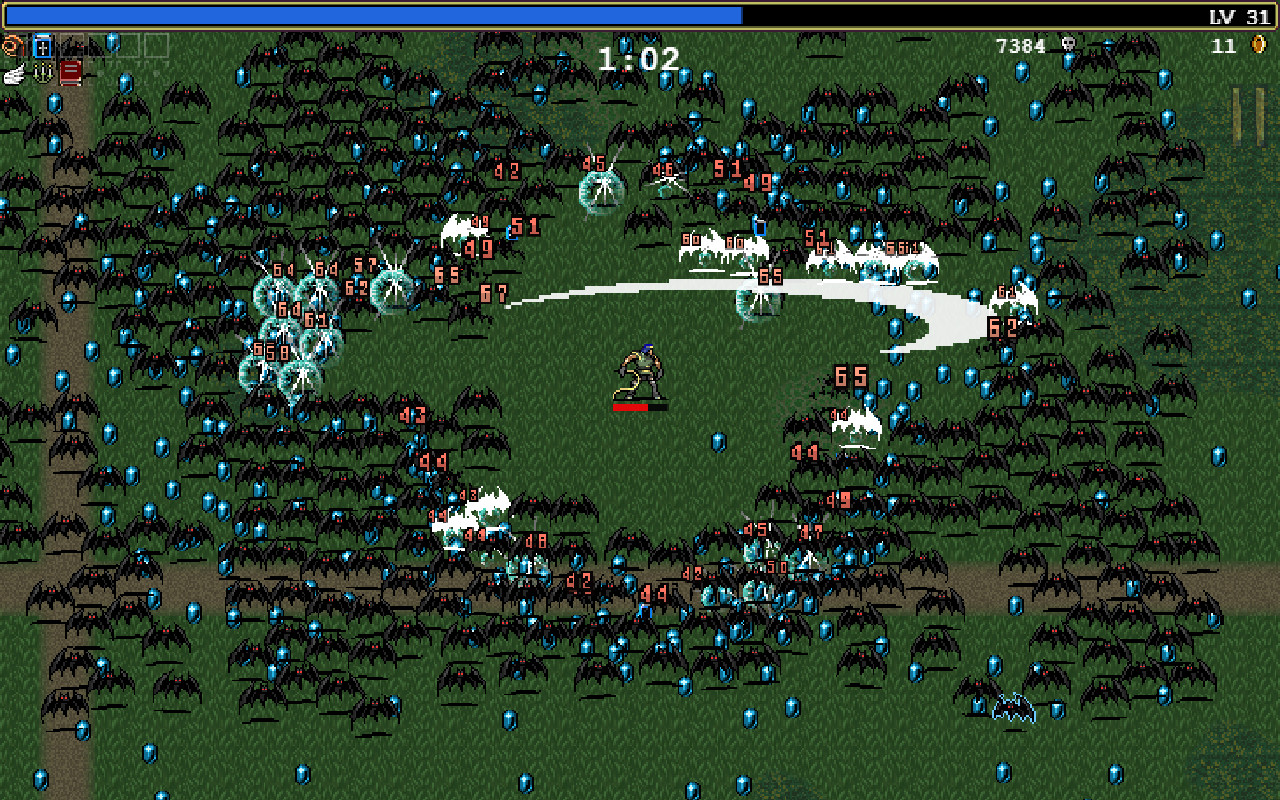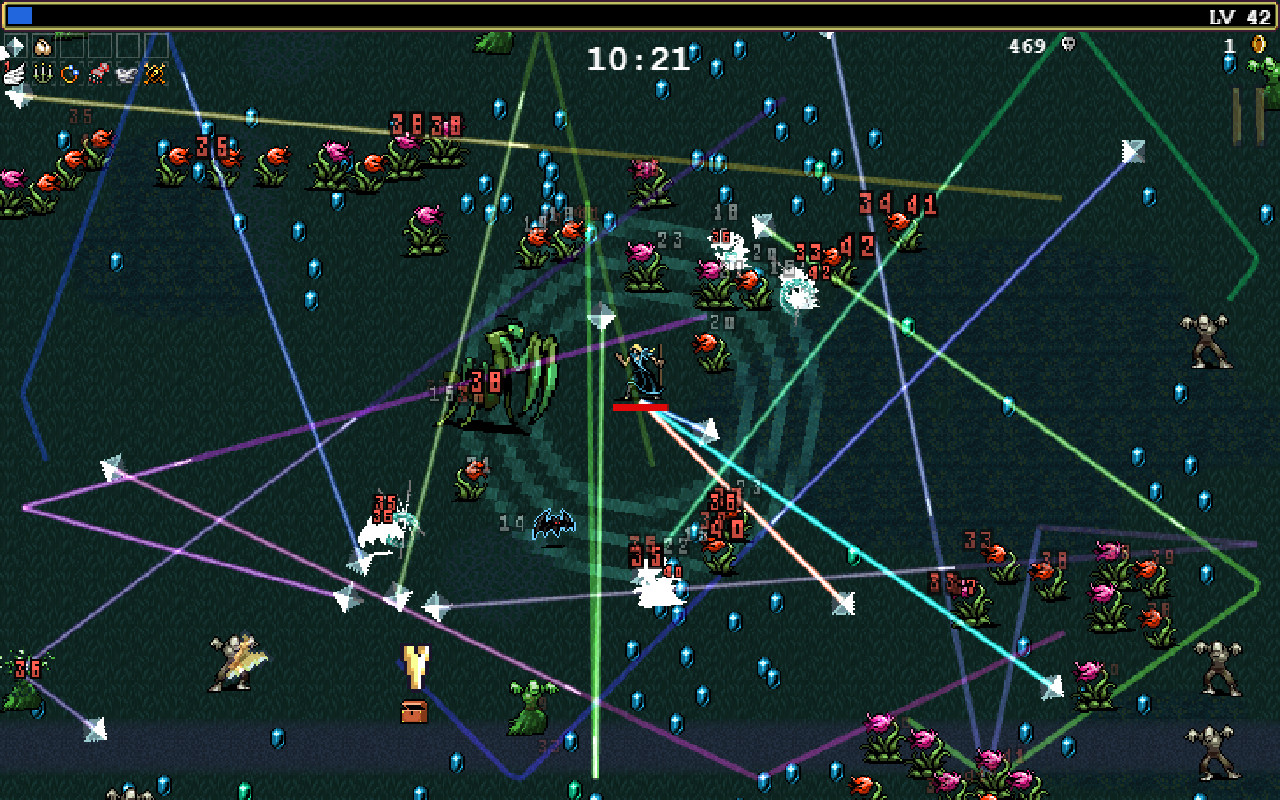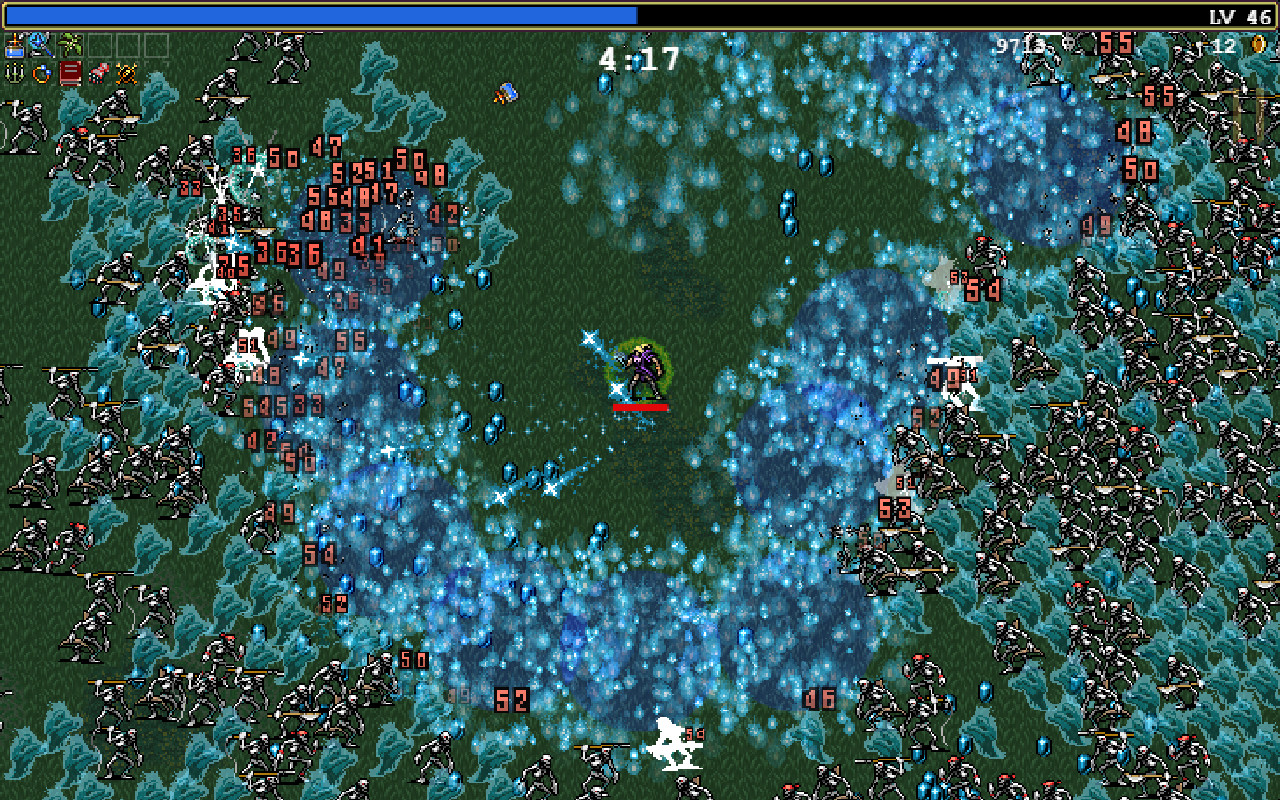
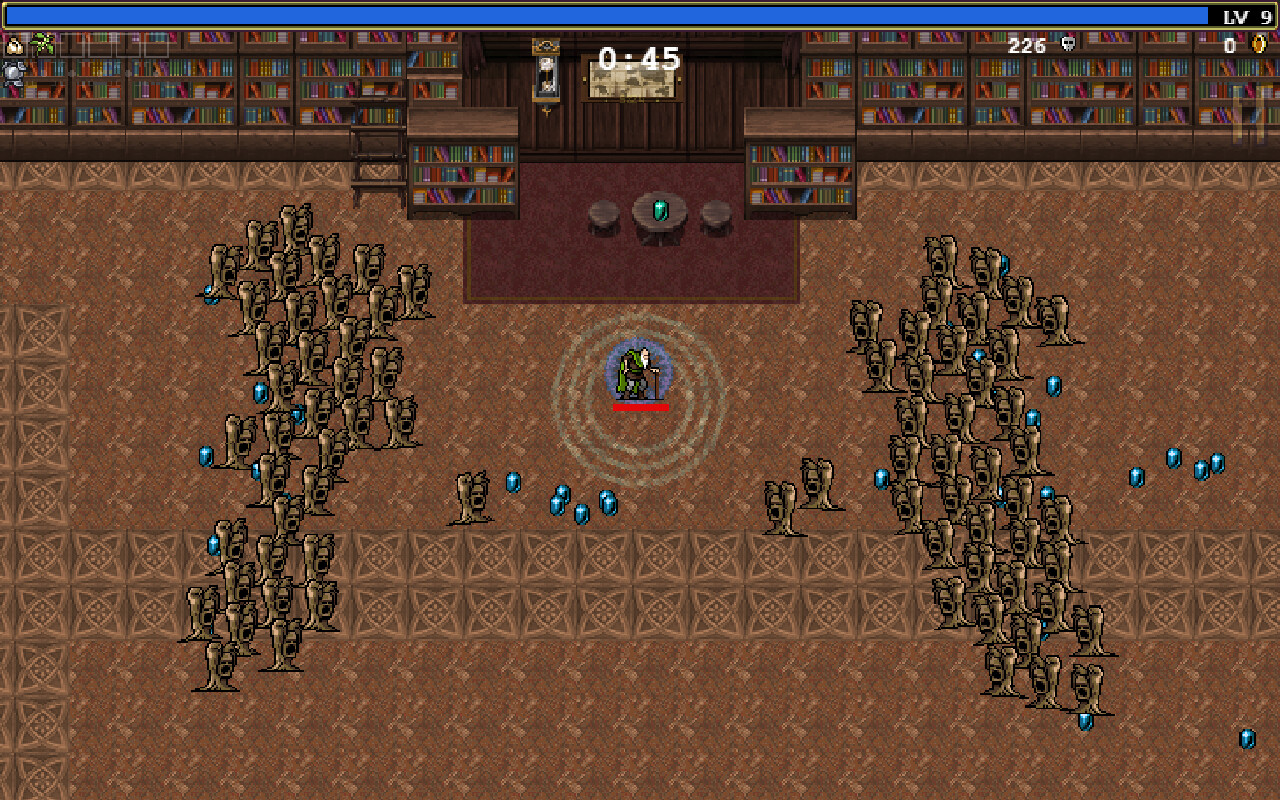
Vampire Survivors plays itself. You move; everything else happens automatically. So the entire game — the only place you make decisions that matter — is the level-up screen.
And the level-up screen is a slot problem. You can select up to six different weapons from level-ups, plus passive items alongside them. Everything below follows from that number.
Which evolution to build — ranked
If you read one section, read this one. Six weapon slots means a run realistically finishes one or two evolutions, so this choice is the most expensive one you make, and the picks you spend on the wrong plan are gone. The ranking below weighs two things: how much the finished weapon actually does, and whether the passive it demands would earn its slot anyway. That second axis is the one most build lists ignore, and it is why the order is not simply "highest damage first".
| Rank | Evolution | Required passive | Why it ranks here | The catch |
|---|---|---|---|---|
| 1 | La Borra | Attractorb | Attractorb is pickup range, which is one of the strongest early picks in the game on its own merits. So the passive slot costs you nothing — you wanted it regardless. The finished weapon pools damage around you and clears crowds while you move, with no aiming. | Damage is centred on you, so single elites at range take a while to fall over. |
| 2 | Unholy Vespers | Spellbinder | Orbits you and defends the exact band where you actually take hits, which is what keeps runs alive past minute 20. Spellbinder (duration) also extends other timed weapons, so the slot keeps paying. | Crowd clear is close-range only. Something has to answer things that never reach you. |
| 3 | Hellfire | Spinach | Spinach is flat Might, so the passive slot boosts **every** weapon you own, not just this one — the best passive economy of any evolution here. Kills elites fast. | The Fire Wand picks its targets for you. It is damage you cannot aim, which makes it a poor sole answer to a crowd. |
| 4 | Thousand Edge | Bracer | Enormous raw output — the highest on this list when you manage facing, because it fires a continuous wall in the direction you move. | Bracer (projectile speed) does almost nothing for anything else, so the passive slot is spent, not invested. And the weapon is near-useless when surrounded. |
| 5 | Vandalier (union) | Ebony Wings, as a second weapon | Covers every direction at once, which solves the problem every other entry here has. | **It costs two weapon slots**, because a union combines two weapons rather than a weapon and a passive. That is a third of your allocation gone before you have built anything else. |
If you are not sure, build La Borra. It is the only entry whose required passive you would take anyway, it needs no aiming, and it works on every character regardless of starting weapon. Everything below this section is the reasoning behind that ranking — why slots decide a run, what order to take picks in, and the mistakes that leave you at minute 20 with nothing finished.
Slot economics: the rule behind every good build
Six weapon slots sounds generous until you count what an evolution costs. An evolution needs its base weapon and its required passive, both maxed. So one evolution is effectively a weapon slot plus a passive slot, both fully invested.
That means a run realistically finishes one or two evolutions, not five. Which in turn means:
Every weapon you take that you are not going to evolve is an evolution you cannot have.
This is the mistake that ends most runs. Six half-levelled weapons look busy on screen and deal a fraction of the damage of one finished evolution, because evolved weapons are not incremental upgrades — they are a different tier of output.
If you reach minute 20 with six weapons and no evolution, the run is already lost; you just have not been told yet. The enemy scaling assumes you have evolved something.
The pick order that actually lands an evolution
Work in this order and the evolution completes on its own.
-
1
Decide the evolution before the run starts
Not at minute 10. Know which weapon and which passive you are chasing when you press start, because your first few picks either serve that plan or waste it.
-
2
Take the required passive and max it
This is the step people get wrong. Most evolutions need the passive at **max level**, not merely owned. Picking it up once and moving on is why the chest gives you nothing.
-
3
Max the base weapon
Straightforward, but do not let it drift — a weapon sitting at level 6 is not going to evolve regardless of how good your passive is.
-
4
Open a chest after the ten minute mark
The chests that grant evolutions mostly drop from bosses after minute 10. Before that, the conditions can be met and nothing will happen.
-
5
Only now spend slots freely
With the evolution banked, remaining picks are genuinely free. Boost area, cooldown and projectiles, or start a second evolution if the slots allow.
What to take, and when
Not every pick has the same value at the same moment. Roughly:
| Stage of the run | Priority | Why |
|---|---|---|
| First few levels | Your evolution's base weapon and its passive | Everything else is a distraction until this pair is underway |
| Early | Growth and pickup range | They accelerate every later pick by getting you levels faster |
| Early to mid | Push the required passive to max | The gate on your evolution — nothing else unlocks it |
| Mid | One survival pick | Max HP, regen or movement speed keeps a bad corner from ending the run |
| After the evolution lands | Area, cooldown, projectiles | Now they multiply something worth multiplying |
| Late | A second evolution, if slots allow | Only with both slots genuinely spare |
Pickup range and growth feel weak because they do no damage. They are among the strongest early picks anyway, because every level you gain sooner is a pick you get sooner, and the whole run compounds from there.
Build shapes: what each evolution is actually for
The ranking above is the order to pick in. This is the other way to read the same five builds — by the job they do — because a run needs its damage pointed in the right places, not just a lot of it.
- Area control — La Borra. Damage pools around you and cleans up crowds while you move. The default.
- Close cover — Unholy Vespers. Orbits you and defends the range where you actually take hits.
- Single target — Hellfire. Kills elites fast, and leaves crowd clearing to something else.
- Forward pressure — Thousand Edge. Enormous output if you manage facing, weak when surrounded.
- Omnidirectional — Vandalier. Covers every direction, and costs two weapon slots to do it.
In each case the required passive is not optional — it is the build. A La Borra plan without a maxed Attractorb is a Santa Water plan, and Santa Water on its own is not a win condition.
The union shape deserves its own warning. Vandalier costs two weapon slots, because a union combines two weapons rather than a weapon and a passive. It is strong, but it takes a third of your weapon allocation before you have built anything else.
For the complete list of evolutions and their conditions, see the weapon evolution guide.
When you can exceed your slots
The six-weapon cap has documented exceptions, and knowing them changes what is possible late in a run:
- Stage-generated weapons. Weapons that spawn with the stage can be picked up beyond your normal allocation.
- Candybox. Lets you choose any base weapon you have unlocked.
- Arma Dio. Grants an extra passive item.
These are not something to build around from minute one, but if you know a stage offers a pickup, you can plan a slot differently.
The slot mistakes that quietly lose runs
- Taking every new weapon offered. New options feel like progress. Each one is a slot gone.
- Owning the passive but not maxing it. The most common reason an evolution never fires.
- Starting a second evolution before the first lands. You end with two incomplete builds instead of one finished one.
- Skipping growth and pickup range because they do no damage. They are what get you to your evolution before the difficulty curve outruns you.
- Taking a union without accounting for the second weapon slot. Vandalier is not one pick, it is two.
★Honest Take: The character matters less than the commitment
The difference between characters matters far less than whether you commit to one main weapon and finish its evolution. A strong character bleeds damage if you scatter picks; a modest one comfortably clears thirty minutes once its evolution lands.
That is also the honest criticism of the design. The game presents every level-up as a free choice between equally valid options, when in fact most of those options are actively bad for your run. Nothing in the interface tells you that taking a sixth weapon has just cost you an evolution. Players who bounce off Vampire Survivors usually are not playing badly — they are being invited, repeatedly, to make the wrong pick.
If you want characters ranked against each other rather than build construction, see the character tier list. For pickup basics and permanent upgrades, see the beginner guide. The honest review covers the bigger picture.