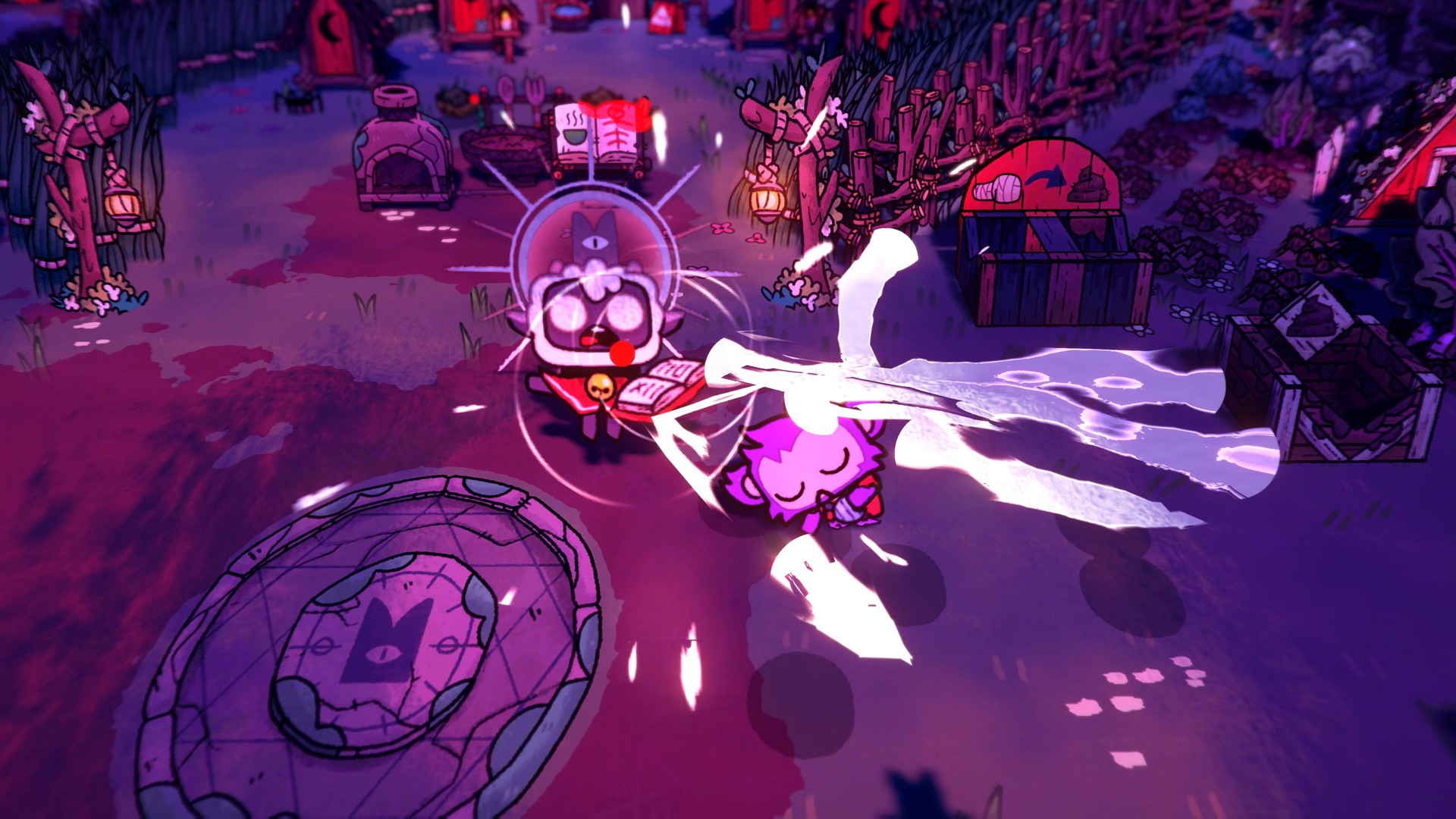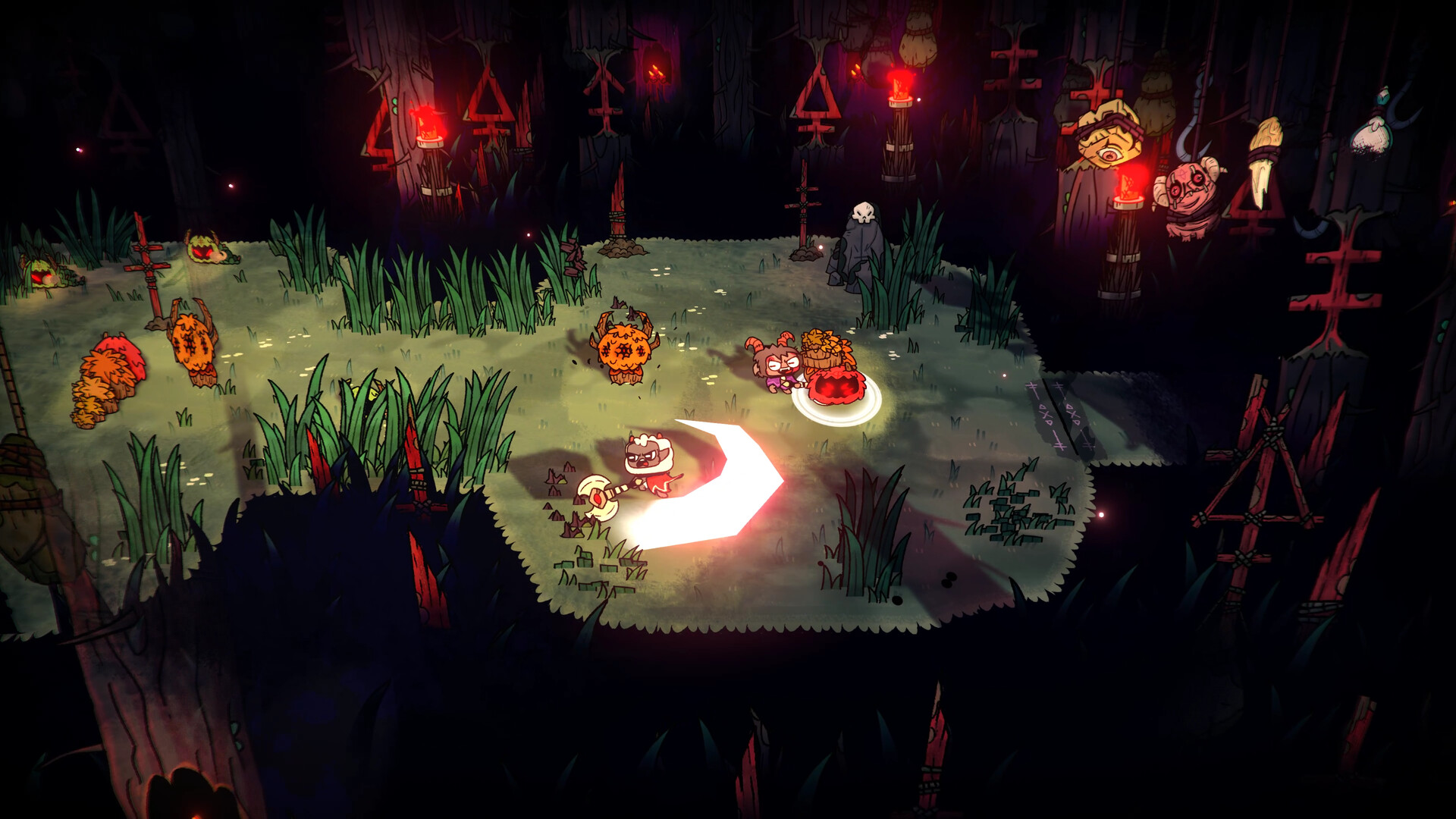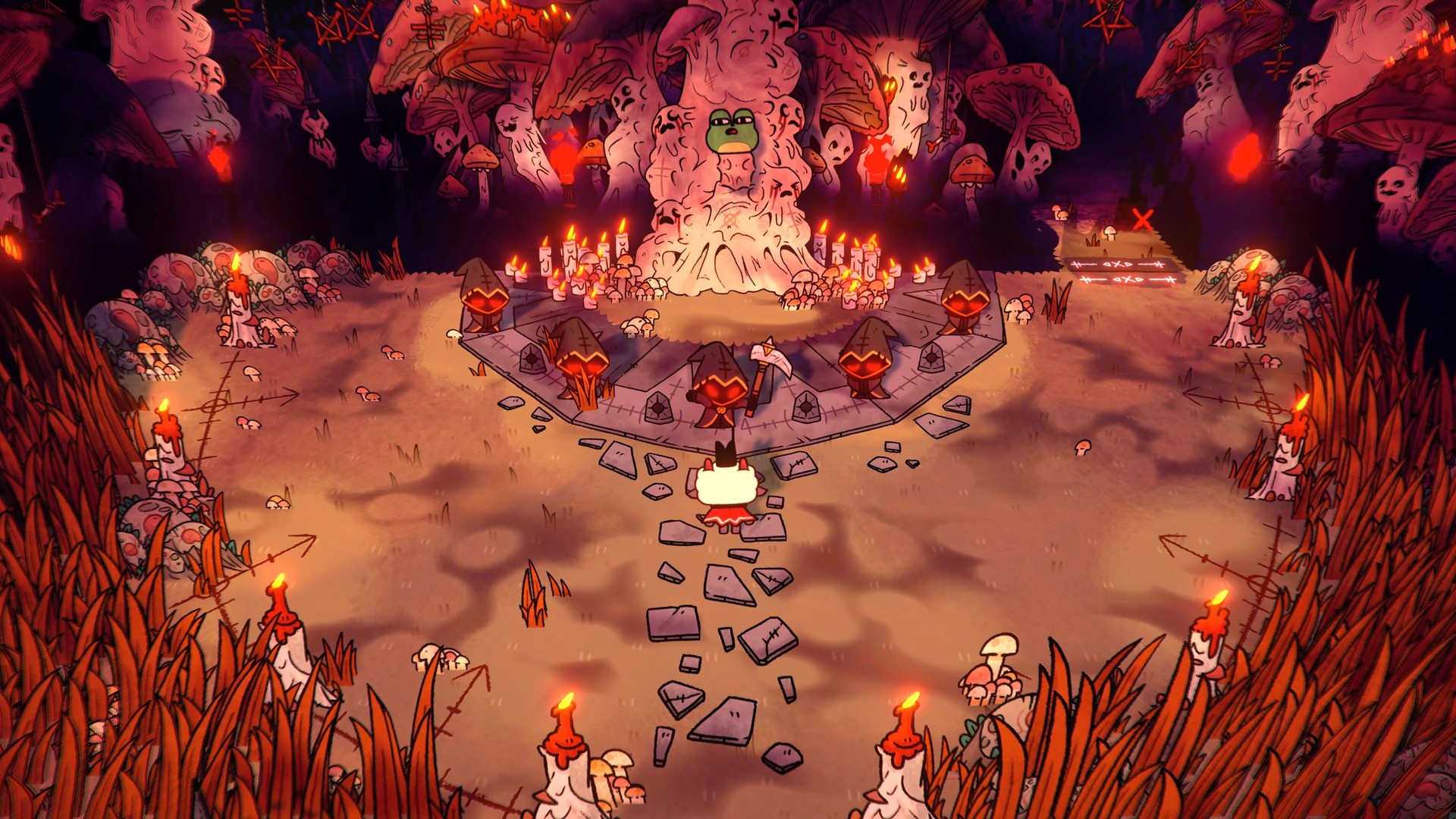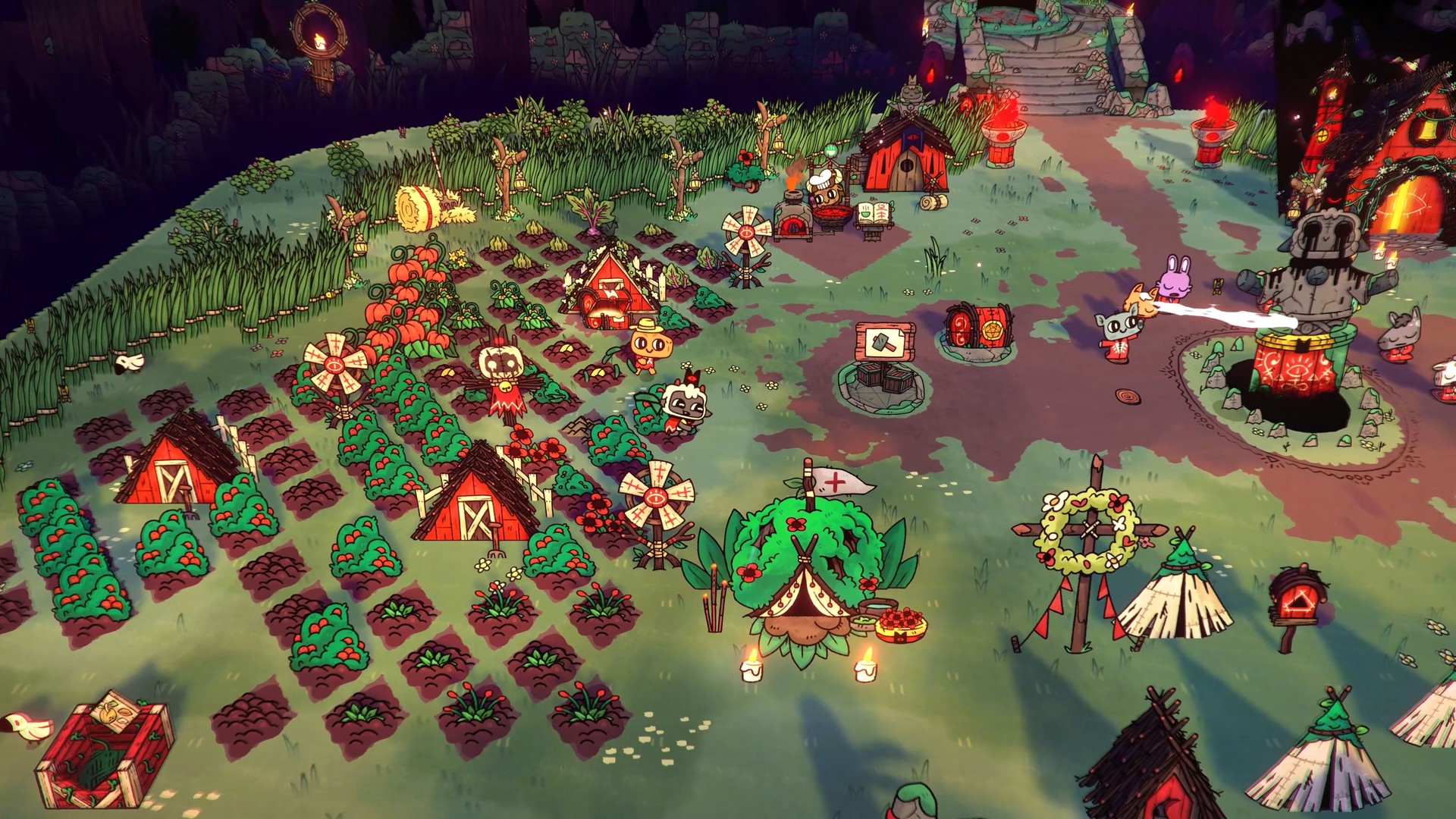
Cult of the Lamb is a roguelite dungeon crawler and a cult management sim in one game, made by Massive Monster and published by Devolver Digital. It launched on August 11, 2022, received three large free updates, and got its first paid expansion, Woolhaven, on January 22, 2026. Its Steam user reviews sit at Overwhelmingly Positive. The question for most readers is not whether it is good, but whether its particular mix suits them. That is what this review answers first.
Buy, wait or skip
| Your situation | Verdict | Why |
|---|---|---|
| You like roguelites and management games and want both in one | Buy | The two halves feed each other, and few other games do this |
| You want a stylish, light roguelite for short sessions | Buy | Crusades are short, and the cult gives you something to do between runs |
| You play with a partner on one screen | Buy | Local co-op as The Goat covers crusades, chores, fishing and knucklebones |
| You are deciding whether to buy Woolhaven now | Wait | It only opens near the end of the base game; buy it when you get there |
| You are price-sensitive but curious | Wait for a sale | Steam discounts happen, and bundles with the DLC exist |
| You want deep, deterministic combat build-crafting | Skip | Weapons are random drops and the combat system is simple next to Hades or Enter the Gungeon |
| You want a deep colony sim | Skip | Followers have needs and traits, but nothing near RimWorld's depth |
| Daily upkeep chores sound like work to you | Skip or try Easy | Cooking, cleaning and Faith need attention until automation buildings arrive |
Short version: if you have ever wished a roguelite gave your runs a reason beyond the next run, Cult of the Lamb is close to a safe purchase. The people who regret it are mostly those who wanted one half to be as deep as a genre specialist.
What kind of game it is
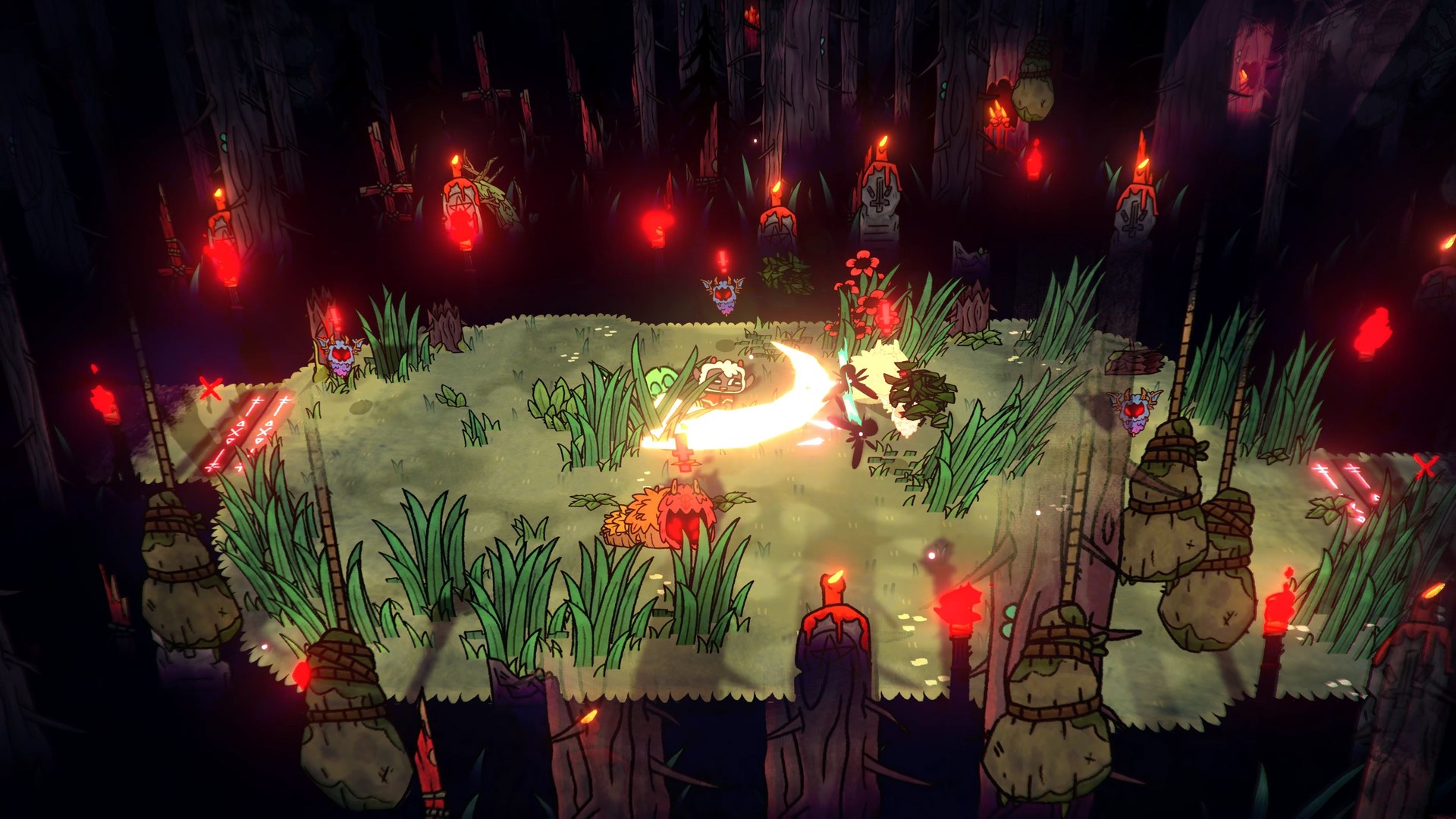
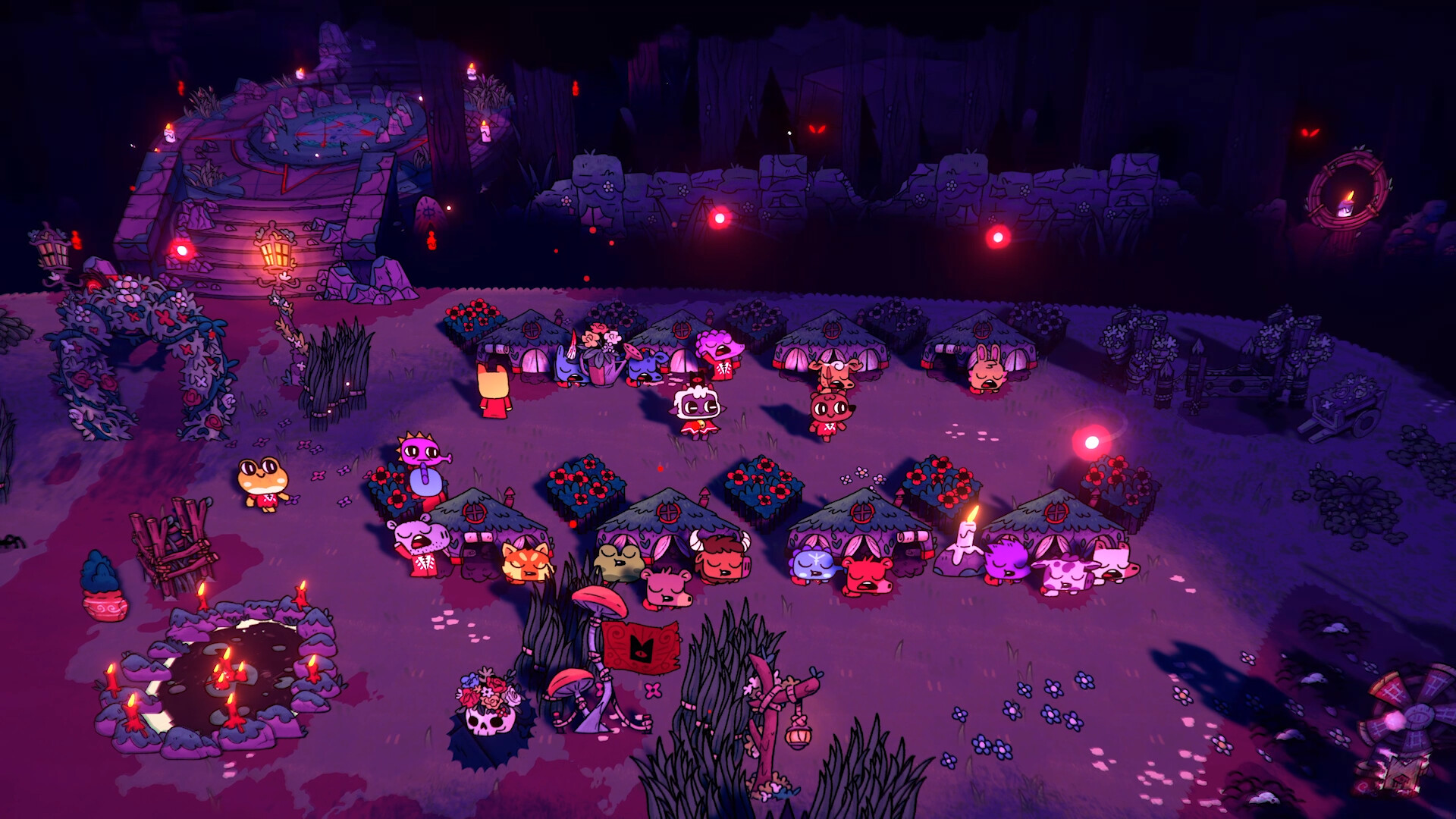
You play the Lamb, saved from sacrifice by The One Who Waits and told to build a cult in his name. The game alternates between two modes. On a crusade you fight through randomly generated rooms with one weapon and one curse, picking up tarot cards that last for that run, and you bring back followers, Bones, materials and coins. At the cult you build structures, feed and house followers, preach Sermons, perform Rituals and declare Doctrines.
The link between them is what makes it work. Each daily Sermon adds points equal to your followers' levels, and those points unlock permanent combat upgrades: extra hearts, new weapon and curse types, a heavy attack and higher starting weapon levels. Each of the four Bishops drops a Heart of a Heretic for a Crown ability such as Resurrection. Bigger, happier cult, stronger Lamb. The Beginner Guide walks through this loop and what to do in your first days.
How much is combat, how much is management
The two halves share one clock: time keeps running at the cult while you are on a crusade, so a long run means hungrier followers and lower Faith when you get back. The balance shifts as the game goes on.
| Stage | What takes your time | Combat or cult? |
|---|---|---|
| First days | Building the Temple, cooking, beds, cleaning by hand, short Darkwood runs | Mostly cult |
| Anura and Anchordeep | Recruiting to open each region gate (7 and 9 followers), Doctrines, harder enemies | About even |
| Silk Cradle and the final boss | Shamura and The One Who Waits, with no tarot cards and only the default fleece in the last fight | Mostly combat |
| Post-game | Revamped, tougher boss fights, then the Purgatory boss rush and Dungeon Gauntlet | Mostly combat |
| Woolhaven | Winter survival, the Furnace, ranching, rebuilding Woolhaven, two new dungeons | Both, with more cult again |
Automation reduces the load: a Farmer Station with a Seed Silo plants and waters, Farmer Station II harvests, a Kitchen cooks queued meals and the Janitor Station cleans. The Cult Management Guide covers the unlock order and the hidden Faith numbers.
Current state: what you get today
| Item | Status |
|---|---|
| Release | Full release (not Early Access), August 11, 2022 |
| Platforms | Windows and macOS (Steam), PlayStation 4/5, Xbox One and Series X|S, Nintendo Switch, iOS via Apple Arcade |
| Free updates | Relics of the Old Faith (April 2023), Sins of the Flesh (January 2024), Unholy Alliance (August 2024), yearly Blood Moon Festival event |
| Paid expansion | Woolhaven (January 22, 2026), priced a little below the base game |
| Cosmetic DLC | Cultist Pack, Heretic Pack, Sinful Pack and Pilgrim Pack (follower forms, decorations, fleeces; Pilgrim adds a comic and a quest) |
| Monetisation | One-time purchase plus optional DLC; no microtransactions |
| Multiplayer | Local co-op for two players; Remote Play Together on Steam |
| Difficulty | Easy, Medium, Hard, Very Hard; Permadeath and Purgatory challenges after the main story |
| Interface languages (Steam) | 14, including English, Japanese, Korean, Simplified and Traditional Chinese, Russian, German, French, Spanish, Italian and Portuguese-BR |
Relics of the Old Faith (version 1.2.0) answered the "combat is too shallow" criticism: a post-game with tougher boss patterns, relics, a heavy attack for each weapon type, new traps, Purgatory with a boss rush and an optional Permadeath mode, and buildings such as the Kitchen. Sins of the Flesh (1.3.0) added Sin, a currency followers generate through new Rituals and buildings, plus the Blunderbuss. Unholy Alliance added local co-op with The Goat as a second character.
Woolhaven is paid, and the store calls it a full-length expansion: two dungeons (Ewefall and The Rot), a Winter mechanic that needs a fuelled Furnace, a second cult area, ranching, the Flail weapon type, new curses and tarot cards, and 17 new buildings. Its Steam user reviews are Very Positive. The store page notes it is only accessible near completion of the base game, and once activated, that save can only be played with Woolhaven installed (the base-game save is backed up first).
What it does well
The loop gives every run a purpose
Most roguelites give you meta-progression as a currency. Here it is a village. A run that ends early still brings home a follower or the Bones for a Ritual, and the next morning's Sermon is stronger because of it. The upgrade with the biggest effect on combat, Might of the Devout (weapons start at a higher level), comes from Sermons rather than from anything you find on a run. The Combat Build Guide shows the numbers: a level X weapon hits roughly 50% harder than the same weapon at level I.
Art, tone and sound
The contrast between cheerful followers and blood sacrifices holds up over a full playthrough. Each region has its own palette and enemies, and River Boy's soundtrack was popular enough to get a separate metal reimagining.
Short, readable crusades
A crusade is a handful of rooms on a branching map, then a mini-boss or a Bishop, and bosses telegraph clearly. The difficulty settings tune both halves: Easy halves enemy health and the rate of hunger, illness, dissent and aging, while Very Hard doubles those cult rates.
The updates added real depth
Relics, heavy attacks, the post-game, Purgatory, the Sin system and co-op all arrived free. Much of the "thin" criticism in old reviews was aimed at the launch version.
Where it falls short
Combat is light, and the drops decide a lot
You never choose a weapon from a menu. The first room drops one weapon and one curse, and a Godly Sword there versus a weak Dagger with no good tarot cards are very different runs. The moment-to-moment combat (attack, roll, curse) stays simple to the end, and players coming from Hades will notice within an hour.
Chores before automation
Before automation, every return home means cooking, cleaning, fixing collapsed Sleeping Bags and burying bodies. Followers also become elders at 40 to 55 days old and die about 3.5 days later, so the cult needs constant replacement. Some players find this the charm; others find it a to-do list.
Faith is poorly explained
Faith is a single bar. The game does not tell you that a Sermon at night costs 15 Faith, too few beds 20, or a declined follower quest 25, so many new players lose a cult to dissent without knowing why.
The expansion is late, and co-op is local
You cannot see any of Woolhaven until near the end of the base game, so a bundle buys nothing extra for a new player early on. Co-op is local only, with Remote Play Together on Steam as the workaround.
Common complaints, and how true they are
| Complaint | Is it true? | What helps |
|---|---|---|
| Combat is shallow | Partly. It is simpler than Hades, but relics, heavy attacks and the post-game added a lot | Unlock Might of the Devout and Divine Guardian through Sermons; play the post-game bosses |
| The cult is a chore | True early on, much less once automation is built | Prioritise Farmer Station II, Kitchen and Janitor Station; or play on Easy |
| Followers keep dissenting | Usually a hidden Faith problem | Sermons only in daylight, a bed for everyone, only accept quests you can finish |
| It is too easy | On Medium, mostly yes for roguelite veterans | Play Hard or Very Hard, try Permadeath, or use Purgatory challenges |
| Followers die of old age | True; it is part of the design | Use elders for Rituals, give Skull Necklaces to key followers, resurrect favourites |
| Woolhaven is locked behind the base game | True | Buy the base game first and add the expansion when the store's condition is met |
Cult of the Lamb compared with similar games
| Game | Core loop | How Cult of the Lamb differs |
|---|---|---|
| Hades | Action roguelite with deep, build-driven combat and a story told across runs | Far simpler combat and more randomness; in exchange, a whole management game between runs |
| Enter the Gungeon | Bullet-hell roguelite with a huge gun pool and demanding difficulty | Much more forgiving, melee-focused, and progress carries over through the cult |
| Stardew Valley | Relaxed farming and life sim with light combat in the mines | Darker, faster and combat-driven; the farm exists to feed the crusade |
| RimWorld | Deep colony sim built on emergent stories | Far lighter simulation; followers have needs and traits but few complex interactions |
Next to Hades, Cult of the Lamb is the better choice when you want something to tend between runs, and the worse one when the fighting is what you came for. Fans of Stardew Valley usually enjoy the cult half and find the crusades approachable on Easy.
Related guides
New to the game: Beginner Guide. Doctrines, Rituals, dissenters and automation: Cult Management Guide. Builds, tarot cards, fleeces and relics: Combat Build Guide. Weapon and curse rankings: Weapons and Curses Tier List. Regions and Bishop fights: Crusade Guide.
★Honest Take — two light games that make each other better
Cult of the Lamb earns its 8.8 because neither half would stand out alone, and together they do. A short crusade matters because it feeds the cult, and the cult matters because it makes you stronger for the next crusade. The look and the free updates add a lot on top. The reservations are honest ones: combat is simple and run power depends on drops, the early cult is a stream of chores, the game hides the numbers behind Faith, and the paid expansion waits until the end. If you want a specialist experience in either genre, there are better games. If you want both at once with a strong personality, there is still nothing quite like it.