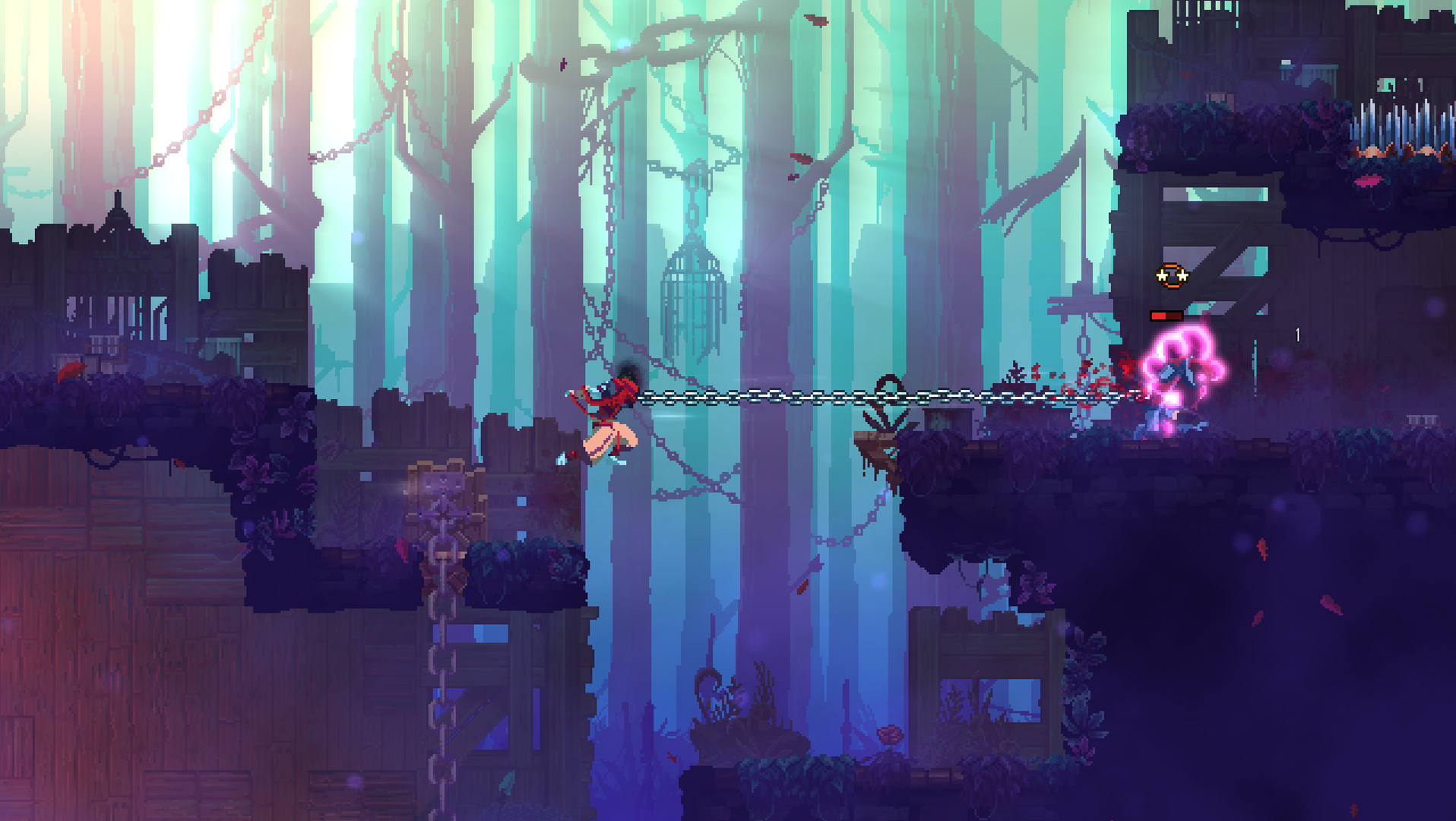
The verdict: progression means clearing one BC at a time
The long-term play in Dead Cells is stacking up Boss Cells (BC) one by one, earned by defeating the Hand of the King. The more BC you slot in, the harder it gets, unlocking up to a maximum of 5BC step by step. Rare blueprints and final upgrades only appear at higher BC, so the heart of the game is simply BC progression.
BC is designed so that "raising the difficulty unlocks more of the game." Healing shrinks and enemies get tougher, but in return item levels and cell drops rise, making it easier to craft strong gear. Climbing one step at a time is the fastest way to improve.
What changes per BC
| BC | Healing | Main changes |
|---|---|---|
| 0BC | Flask + path fountains | Base difficulty. Learn the mechanics by feel |
| 1BC | Fewer healing fountains | Enemies strengthened. The first wall |
| 2BC | Path fountains removed | Cell drops doubled. Flask management matters |
| 3BC | Locked to 3 flask charges | Item level +1. Faster, short-fight focused |
| 4BC | No path fountains | Enemies teleport, sharper detection, +3 gear, triple cells |
| 5BC | No fountains + 5th flask tier | Malaise infection added. Hardest difficulty |
From 4BC enemies teleport and flank you from behind. The Malaise added at 5BC builds over time the more enemies are alive in a biome, and at its ten-tier maximum it raises enemy damage, attack speed and spawns. The rule is to keep moving and clear enemies fast.
Recommended biome routes
Early on, favour routes that let you pick up healing fountains and blueprints. The classic path you can take without runes is Prisoners' Quarters → Promenade → Ramparts → Black Bridge → Stilt Village → Clock Tower → Clock Room → High Peak Castle → Throne Room.
-
1
First branch
The Promenade needs no rune and is stable. With the Vine Rune you can branch to the Toxic Sewers, or to the Arboretum with the Teleportation Rune.
-
2
Second branch
The Ramparts are the standard pick. Grab blueprints and shops on the way to the first boss, the Concierge, at Black Bridge.
-
3
Mid-game
From the Stilt Village line head to the second boss, the Time Keeper, in the Clock Room. Tidy up your item level and build here.
-
4
End-game
Collect two Castle Keys in High Peak Castle, then face the Hand of the King in the Throne Room.
Cells and blueprints: building permanent upgrades
The Cells you gather on the run are spent at the Collector by each biome exit for permanent upgrades. Use them to unlock weapons, skills, mutations and blueprints, boost flask charges, and raise starting gold; anything unlocked carries over to later runs. Blueprints picked up on the path become permanent once handed in, joining the drop pool from then on.
Pros
- +Permanent upgrades stabilise later runs so you can fight even as BC rises
- +Unlocking blueprints selectively thickens the drop pool and helps you draw your core build
Cons
- −Dying loses any uninvested cells from that run (invest often at exits)
- −Over-unlocking spreads the drop pool thin, making your target gear rarer
Because healing shrinks at high BC, build your three mutation slots around the balance of damage, healing and mobility. Anchor on damage to kill fast and suppress Malaise, and add one on-kill or on-hit healing mutation to cut accidents dramatically.
Combine it with the sibling guides
Progression assumes you understand builds and bosses. How to assemble a colour-matched build is covered in the Build Guide, and how to beat each boss is in the Boss Guide.
★ My take: BC is not a "wall" but an "unlock"
Honestly, the BC in Dead Cells feels less like a difficulty wall and more like a key that unlocks new gear and play. Losing healing does sting, but item levels and cells rise in step, so your build grows fast. Even if 1BC stops you once, returning after building permanent upgrades makes it surprisingly easy. Rather than rushing for 5BC, climbing while collecting blueprints at each step is, frankly, the quickest route in the end.