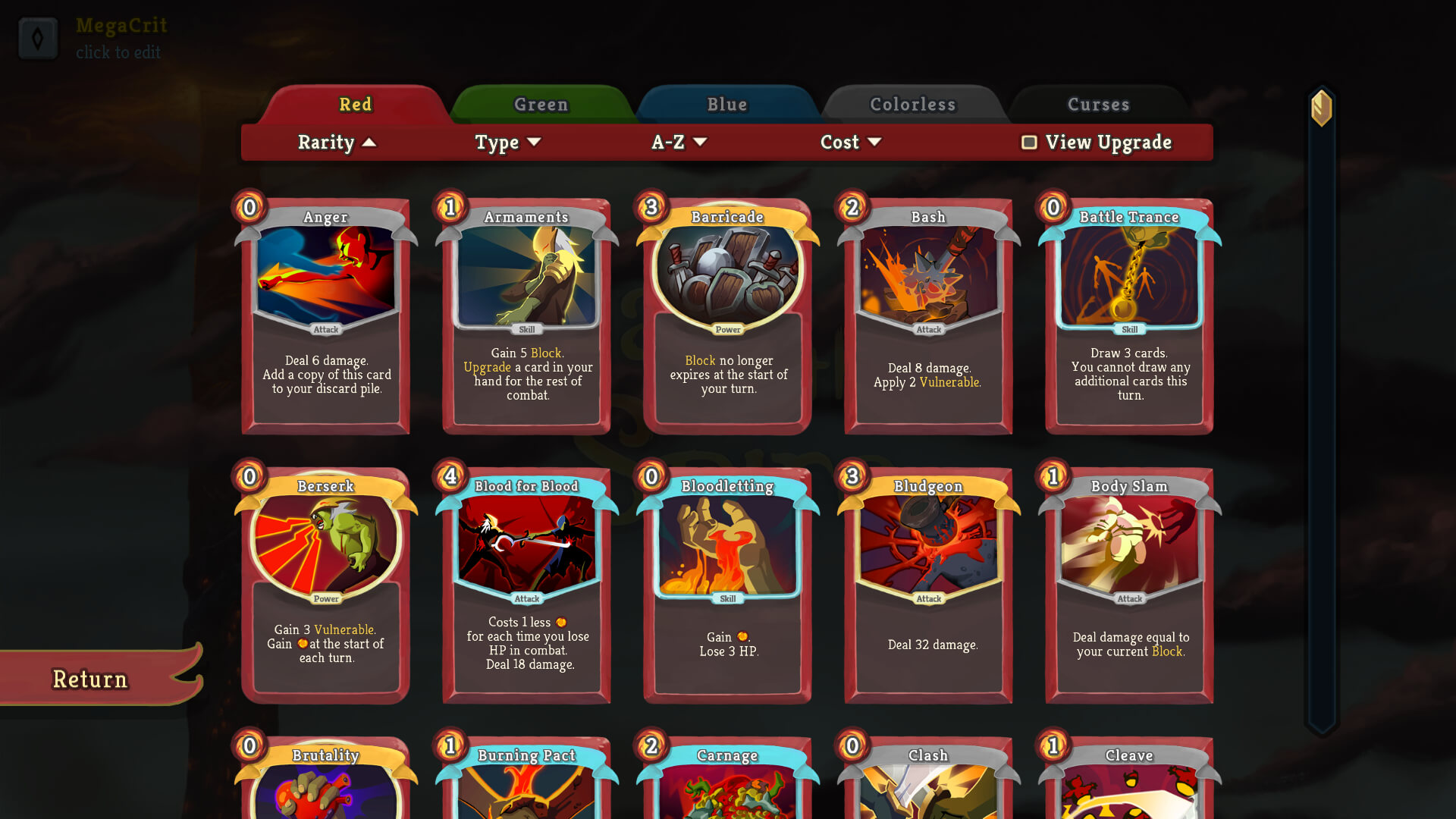
Slay the Spire is a roguelike deckbuilder by the indie studio Mega Crit. It left Early Access on PC in January 2019, came to consoles the same year and to iOS and Android later, and its Steam user reviews sit at Overwhelmingly Positive. Most deckbuilders released since are compared with it. Since March 2026 there is also a sequel in Early Access, so the question is no longer only whether the game is good, but whether you should buy this one, the sequel, or neither. That is what this review answers first.
Buy, wait or skip
| Your situation | Verdict | Why |
|---|---|---|
| You like turn-based strategy, card games or roguelikes | Buy | It is the most complete game of its kind, and the decisions stay interesting for hundreds of hours |
| You have never played a deckbuilder | Buy | Simple rules, enemies that show their next move, and a forgiving first character make it a good first one |
| You want to play on Switch, PlayStation, Xbox or a phone | Buy the original | It is on all of them; Slay the Spire 2 is currently PC only |
| You want to play with friends | Look at Slay the Spire 2 | The original is single-player only; the sequel has co-op for up to 4 players |
| You want only finished, balanced games | Buy the original, wait on the sequel | The original is complete; the sequel is still adding content and changing balance |
| You are price-sensitive | Buy on a sale | It has been sold at deep discounts on Steam, and the game is the same at any price |
| You hate losing a well-played run to the cards you were offered | Skip | Randomness in rewards and relics is part of the design and never goes away |
| You want story, characters or spectacle | Skip | The story is a few lines of text and the presentation is plain 2D |
Short version: if you like making decisions under pressure, Slay the Spire is close to a safe purchase, and the original is still the better starting point than the sequel. The people who regret buying it are mostly those who dislike randomness, not those who find it too hard.
What kind of game it is
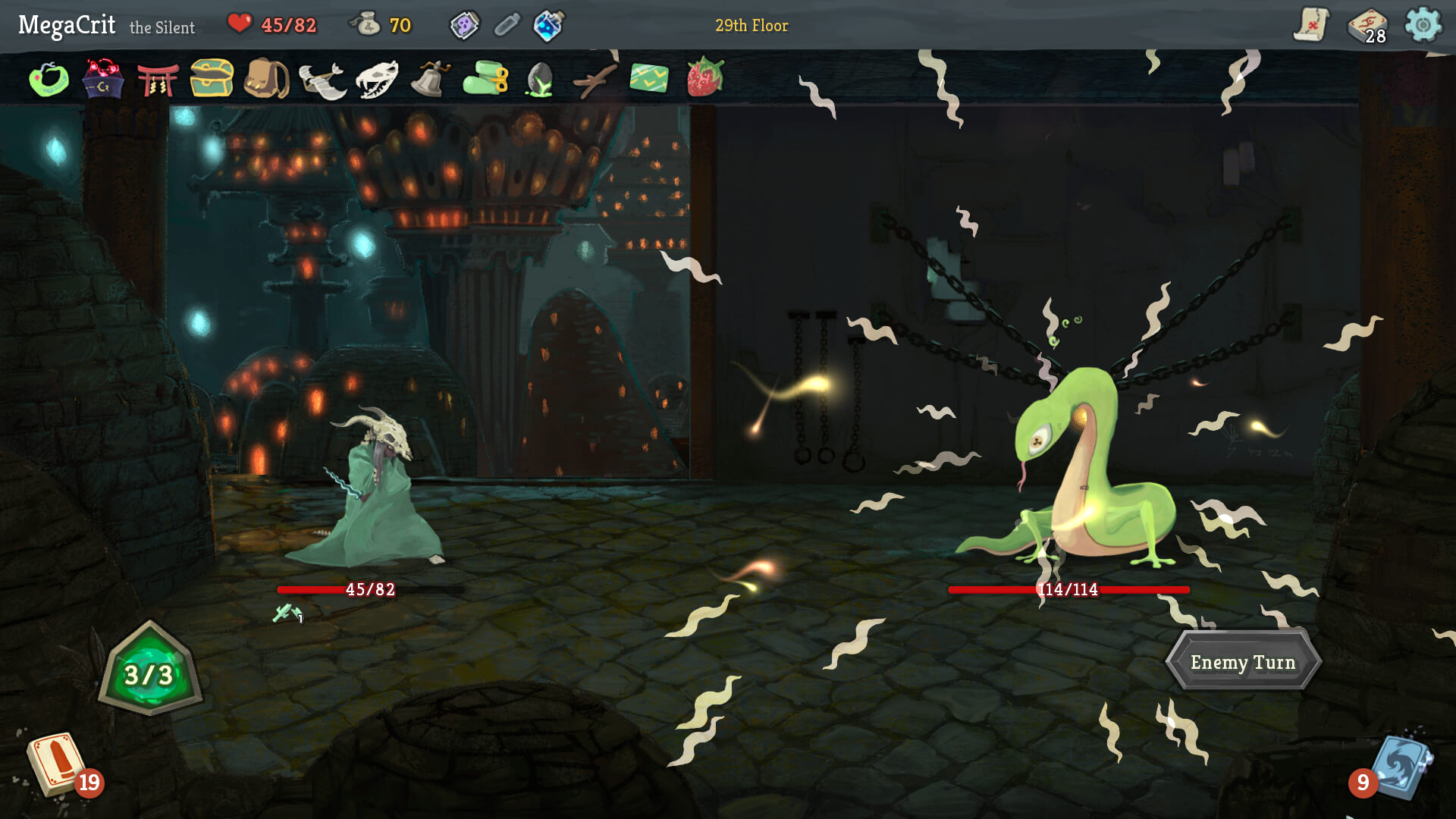
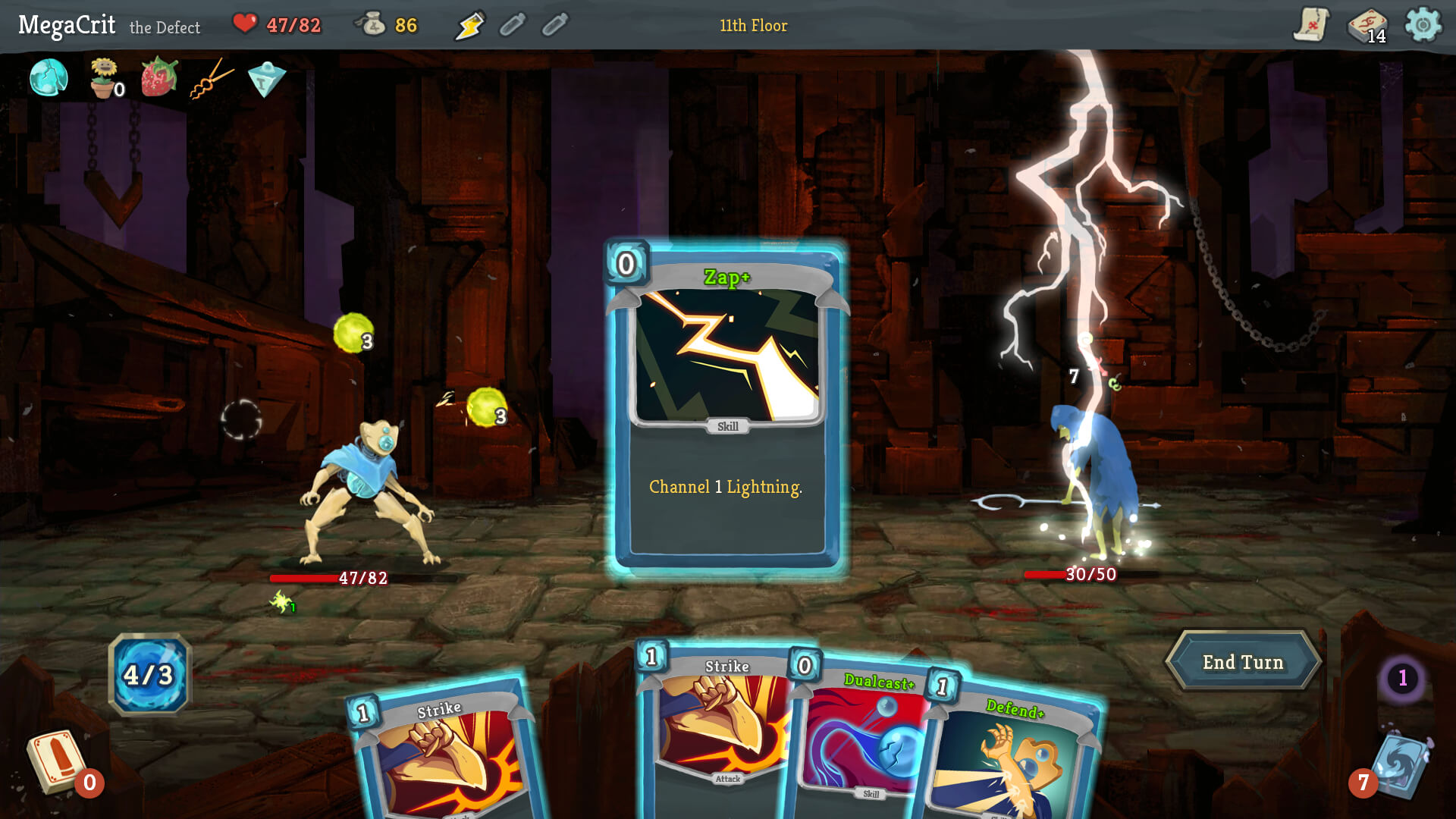
You pick a character and climb the Spire: three Acts, each a map of branching paths with normal fights, elites, unknown rooms, shops, Rest Sites and treasure, ending in a boss. Fights are turn-based. You draw five cards, spend Energy on attacks and Block, and every enemy shows its intent for the next turn, so each turn is a small puzzle with visible stakes. HP carries over between fights.
After a fight you choose one of three cards or skip. That choice is the heart of the game: more cards is not better, because every weak card makes your best ones come up less often. Relics add permanent effects, Rest Sites let you heal or upgrade one card, and shops sell cards, relics, potions and card removal. If you die, the run ends and you start over, keeping only unlocks. The beginner guide covers the habits that win first runs.
Current state: what you get today
| Item | Status |
|---|---|
| Release | Full release (not Early Access) on PC in January 2019, after Early Access from late 2017 |
| Platforms | Windows, macOS and Linux; PlayStation 4, Nintendo Switch, Xbox One; iOS and Android |
| Characters | Ironclad, Silent, Defect and Watcher; the Watcher was added as a free update in January 2020 |
| Modes | Standard runs, Act 4 with the Corrupt Heart, 20 Ascension levels per character, Daily Climb with leaderboards, Custom Mode with modifiers and Endless |
| Monetisation | One-time purchase; the only DLC on Steam is the soundtrack |
| Multiplayer | None; single-player only |
| Mods | Steam Workshop on PC |
| Interface languages on Steam | 17, including English, Japanese, Simplified and Traditional Chinese, Korean, Russian, German, French, Spanish, Italian and Portuguese-BR |
| Sequel | Slay the Spire 2, in Early Access on Steam since March 2026 (PC only) |
The original is finished. It no longer gets content updates, and it does not need them: the four characters, Act 4 and Ascension are all in the box.
What about Slay the Spire 2?
Slay the Spire 2 entered Early Access on Steam on 5 March 2026, made by the same studio on a new engine (Godot). It has five characters: the Ironclad, the Silent and the Defect return, and the Necrobinder and the Regent are new. The Watcher is not among them. Its biggest addition is co-op for up to 4 players, with multiplayer-specific cards. Each Act also comes in two versions chosen at random per run.
It is a real Early Access game. The developers ship a beta branch every two weeks or so and merge it into the main game in larger updates, and they have said the base difficulty is being adjusted because it was too hard. Content such as cards, events, enemies and areas is still being added. That is good news for the sequel's future, and a reason not to treat it as a replacement for the original yet.
What it does well
Decisions that matter, every few minutes
The best thing in Slay the Spire is how much every small choice matters. Skipping a card, removing a Strike for 75 Gold, choosing an elite or a Rest Site, picking one of three boss relics: each shapes the next hour of the run, and none has an obvious right answer. Because enemies show their intent, a lost fight can usually be traced to a decision you can make differently next time.
Four characters, four ways to win
The characters share the map, enemies and relics, but not their cards. The Ironclad scales Strength or Exhausts cards for value and heals after every fight; the Silent wins with Poison, Shivs and discard engines; the Defect builds orbs scaled by Focus; the Watcher switches between Wrath (double attack damage dealt and taken) and Calm. Learning one does not teach you the next. The character guide compares all four and their builds.
A long ladder after the first win
Each character has 20 Ascension levels, unlocked one at a time by winning. They stack: more elites, less healing after bosses, a curse from Ascension 10, lower max HP from Ascension 14, and two bosses at the end of Act 3 at Ascension 20. Act 4 and the Corrupt Heart sit on top. The Ascension guide covers the milestones and boss tactics.
Where it falls short
Variance you cannot always play around
Some runs never offer a good attack before the first Act 1 elite, or give three boss relics that hurt your deck. Good pathing and skipping weak cards reduce this, but do not remove it. At high Ascension, where there is less slack, a bad offer sequence ends more runs. The relic tier list helps with boss relic choices, but no guide fixes a run without damage.
Plain presentation
The art is flat 2D with little animation, and the story is a handful of lines. The music is good, but if you need visuals or a narrative to stay motivated, this game gives you almost nothing outside the decisions.
The game does not explain itself
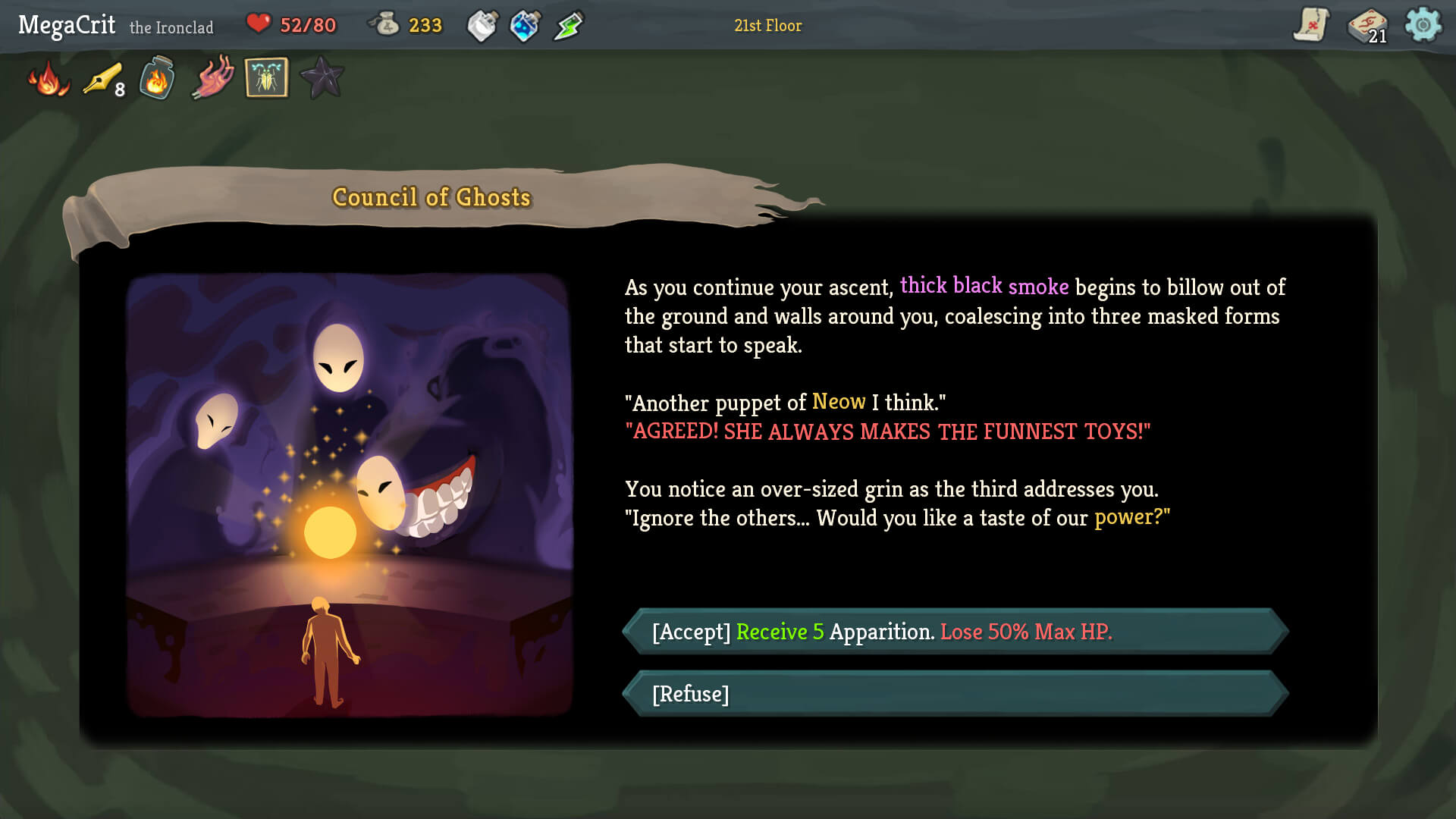
Act 4 is hidden behind three keys, and the game never tells you how to get them. Several famous cards, such as Catalyst, Limit Break and Echo Form, only enter the pool through unlock levels, so early runs can feel short of options. The idea that skipping cards is good is the most important rule in the game, and you learn it by losing.
Common complaints, and how true they are
| Complaint | Is it true? | What helps |
|---|---|---|
| It is just a luck game | Partly. Rewards, relics and shops are random, and some runs cannot be won | Skip weak cards, remove Strikes, fight elites once you have damage, read the boss icon on the map |
| The graphics look dated | Yes. Flat 2D art and simple animation, and they were never the selling point | Judge it by the gameplay trailer; if that does not grab you, the visuals will not later |
| It is too hard | The first win takes many players a long time | Start with the Ironclad, take fewer cards, use potions in elite and boss fights |
| Runs are too long | A full run is long for a roguelike | You can save and quit at any point and resume the run later |
| I keep getting stuck at the same level of Ascension | High Ascension is a steep, deliberate grind | Losing does not lower your level; climb one step at a time |
| There is no multiplayer | True for the original | Slay the Spire 2 has 4-player co-op in Early Access |
Compared with similar games
| Game | Core loop | How Slay the Spire differs |
|---|---|---|
| Slay the Spire 2 | Same structure, new characters, alternate Acts, 4-player co-op; Early Access, PC only | The original is complete, on every platform and has the Watcher; the sequel is the choice for co-op |
| Balatro | Poker hands scored as Chips × Mult, Jokers bought between rounds, no enemies | Slay the Spire is about tactical fights and routing; Balatro is shorter and all about one number |
| Monster Train | Place units on three floors of a train to protect the Pyre, with two clans per run | Monster Train is faster and more about huge combos; Slay the Spire is slower, more about every card and HP point |
| Inscryption | A story-driven card game mixing a deckbuilding roguelike, escape-room puzzles and horror | Inscryption is a story you play once; Slay the Spire is a run-based game you play for years. Inscryption's free Kaycee's Mod adds a replayable roguelike mode |
If you liked Slay the Spire, Balatro is the obvious next buy when you want shorter sessions; see our Balatro review. Monster Train suits players who enjoyed the big combo turns more than the careful defence. For a deckbuilder that puts its cards on a map instead of in a combat hand, read the Loop Hero review.
Related guides
New to the game: beginner guide. Choosing and learning each character: character guide. Which boss relics to take: relic tier list. Climbing difficulty and beating the Heart: Ascension guide.
★Honest Take — the genre's reference point, and still the place to start
Slay the Spire earns its 9.4 because almost every minute is spent on a decision that changes the rest of the run, and because four characters and 20 Ascension levels each keep that true for hundreds of hours. It is complete, cheap, on every platform and has no paid DLC. The reservations are honest ones: it looks plain, it hides important systems, and some runs are lost before you could do anything. Slay the Spire 2 changes the recommendation only for players who want co-op or are happy to play an unfinished game. For everyone else, the original is still the deckbuilder to buy first, and the one every other deckbuilder is measured against.