Verdict Games Verdict Games
Slay the Spire Beginner Guide|Early Decisions and Deckbuilding Basics

Slay the Spire Beginner Guide|Early Decisions and Deckbuilding Basics

Author: Verdict Games Editorial Team Last Updated:

The Bottom Line

Keep the deck thin, commit to a win condition, never neglect block, and plan your route around rest sites and question marks. Letting the relics you find shape the deck direction is what makes the win consistent.

Summary

The core of Slay the Spire is keeping your deck thin and committing to one win condition. More cards is not better — bloating your deck with weak picks means you draw garbage in the fights that matter. This guide covers the early-game mindset — balancing block and damage, planning your route around rest sites and elites, and leaning into your relic for build direction.

Who This Is For: New players or anyone struggling to win a first run Beginner-friendly

Key Points

Key Points

1

More cards isn't always better — learn to skip

2

Don't neglect block while building damage

3

Plan routes through rest sites, chests, and elites deliberately

4

Let relics push the deck direction early

The Biggest Tip — Keep the Deck Thin

The number one beginner mistake is assuming "more cards equals stronger deck." Slay the Spire works the other way — adding weak cards thins your draw and stops you from finding your finishers.

You can always skip the post-combat card reward. If a card doesn't make your current deck stronger, the right call is to walk away. A small, sharp deck is a consistent deck.

Early-Game Plan

  1. 1

    Balance damage and block

    Don't let block cards drop out of the deck. Damage-only builds die to chip damage and accidents.

  2. 2

    Commit to one win condition

    Strength stacking, poison, scaling damage — pick a direction and only take cards that support it.

  3. 3

    Plan the route deliberately

    Choose paths based on rest sites, chests, and question marks. Elites are risky but generous.

  4. 4

    Lean into your relic

    Adjust the deck to synergize with the relics you pick up. That's where consistency comes from.

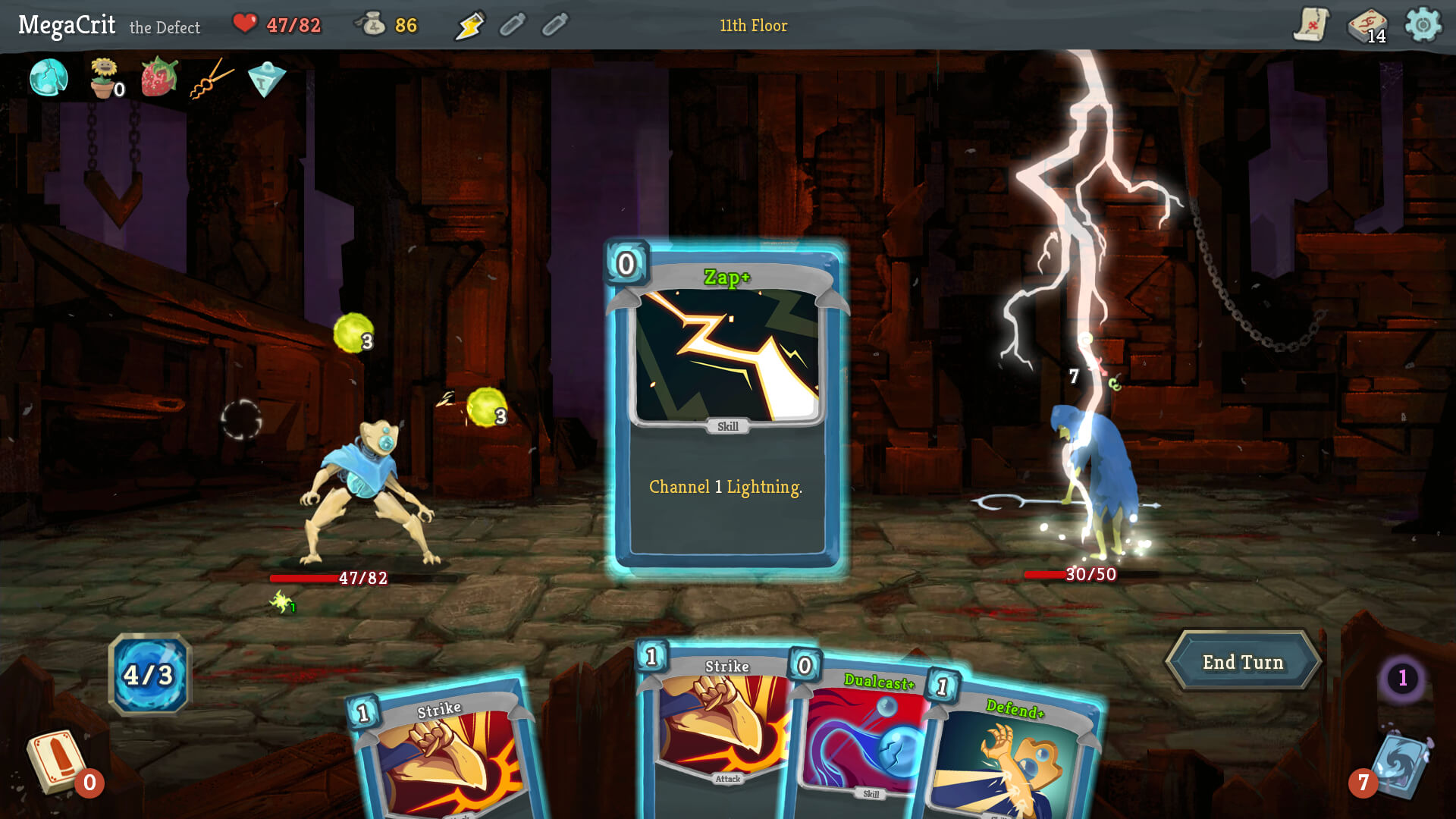
HP carries across floors. Winning a fight at low HP often means losing the next boss. Plan rest-site healing into your route and treat HP as a long-term resource, not a per-fight one.

Reading the Map

Node Contents Play
Rest site Heal or upgrade a card Heal if low, upgrade if comfortable
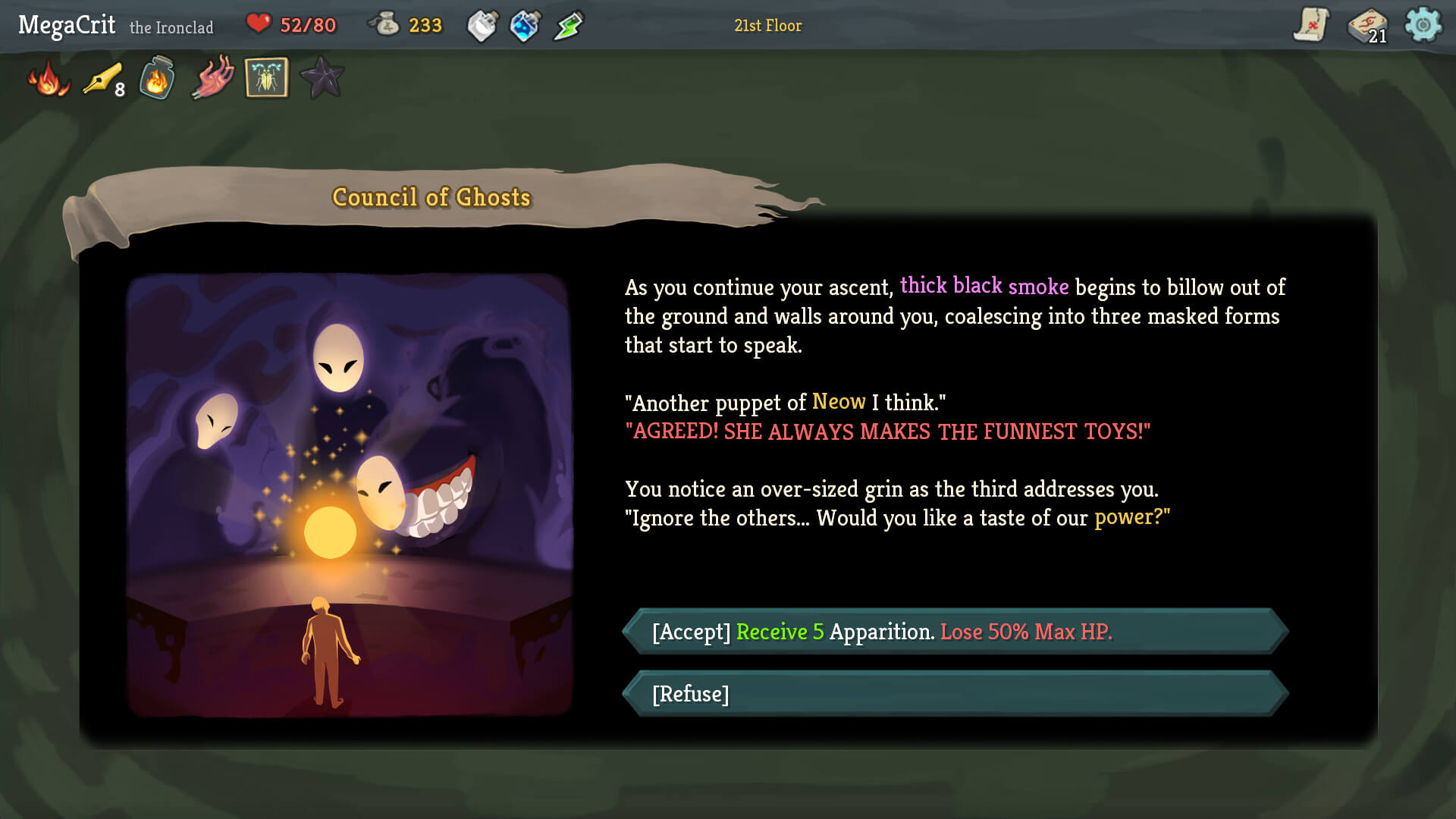
Question mark Random event Read the risk-reward and decide
Elite Tough enemy, great relic Hit only with a solid deck
Shop Buy cards, remove cards Use card removal to thin the deck

Next Steps

Once you've got the basics down, dig into per-character strategy. For all four characters and recommended builds see the Character Guide, and for the relics that shape builds see the Relic Tier List. The full game review is at Honest Review.

★Honest Take — A Game Where Losses Make Sense

Honestly, defeats in this game are almost never "bad luck" — they're "bad decisions." After every loss, you can point to the card you shouldn't have taken or the rest site you skipped, and that clarity is what makes the game rewarding. Lean on Ironclad, "thin deck, one win condition," and your first clear isn't far away.

FAQ

FAQ

No. Adding cards dilutes your deck and makes it harder to draw your key pieces. Take only the cards that push your win condition forward and confidently skip the rest. Skipping the post-combat card reward is always an option.
Don't let block fall off. Pure-damage decks end runs to chip damage. Maintain a block-and-damage balance, use shops and question marks to refine the deck, and plan rest sites for both healing and key card upgrades.
Relics shape the build's direction. Build your deck around the relics you've picked up and synergies emerge naturally. Elite fights give powerful relics but carry real risk — go after them once your deck is solid.
Ironclad. High HP, tanky, and a clear "stack strength, hit hard" identity — perfect for learning deckbuilding and roguelike fundamentals.

Our editorial policy is honest, no-spin reviews. We separate facts from opinion and back every rating with reasoning. View Editorial Policy

Related

Related Articles