How to think about classes in Urtuk
Urtuk: The Desolation gives you a roster of classes split across three broad roles — tanks that anchor and absorb, damage dealers that kill but die if exposed, and support that keeps everyone standing. The temptation, as in any tactics game, is to rank the biggest damage numbers at the top. Resist it. Urtuk is a game of attrition, permadeath and lethal terrain, so the classes that truly carry are the ones that control the battlefield and keep your fragile band alive. A unit that can shove an enemy into a spiked pit, or heal a survivor back from the brink, is often worth more than one that simply hits hard.
This tier list ranks the key classes by their overall value in that context — survivability, control, sustain and how forgiving they are — rather than by raw output. As always, a "lower" class can shine in the right composition, and the strongest bands are balanced rather than stacked.
Remember that mutators reshape any class. The tiers below reflect each class's base role and tools; a well-mutated damage dealer or a tanky support can climb above its starting spot. Treat this as a guide to priorities, not a fixed law.
The classes tier list
This ranking weighs control, sustain, survivability and how much a class carries a brutal, terrain-driven campaign — not damage in isolation. It assumes you protect fragile units and use the map.
S tier — Guardian and Priest
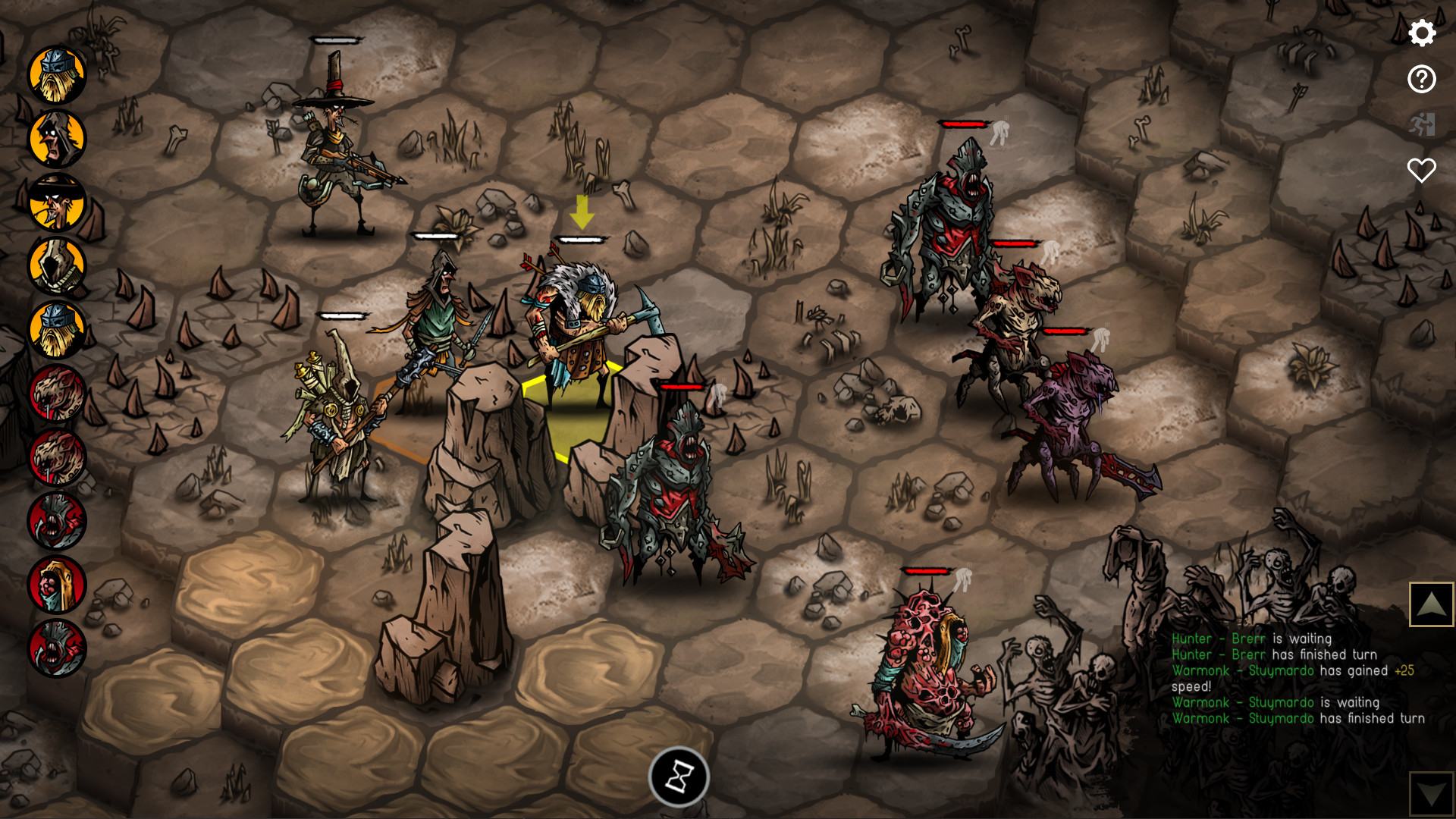
These two define winning bands in Urtuk. The Guardian is the perfect expression of the game's combat: it carries heavy armour to anchor your formation and absorb punishment, but its Bash ability also pushes an enemy two hexes, which in a world full of spiked pits and ledges means it can both hold the line and execute terrain kills. A Guardian that shoves a dangerous foe off a cliff has done more in one action than a damage dealer can in three turns. The Priest, meanwhile, is the answer to Urtuk's biggest problem — attrition. Its lifeleech and healing restore your fighters in a game that otherwise barely lets you recover, and its one-shot Aegis can hard-counter a lethal blow. Together they keep your band intact, which is the whole battle.
A tier — Assassin and Berserker
These are the damage dealers that earn their keep because they do not simply die when things go wrong. The Assassin is arguably the best attacker in the game: with high movement, flanking for automatic critical hits, bleed to wear targets down, and the ability to retreat to safety after a backstab, it deals serious damage and lives to do it again. The Berserker is the self-sufficient bruiser, its Lifesteal Strike keeping it topped up as it hacks through enemies, with a devastating Mansplitter coming online at higher levels. Both reward aggressive play without the fragility that sinks lesser damage dealers, which is exactly what a permadeath game demands.
| Class | Role | Strength | Watch out for |
|---|---|---|---|
| Guardian | Tank / Control | Armour plus Bash displacement into hazards | Lower raw damage |
| Priest | Support | Lifeleech, healing, one-shot Aegis | Fragile if caught alone |
| Assassin | Mobile damage | Flanking crits, bleed, backstab escape | Needs openings to flank |
| Berserker | Damage | Lifesteal sustain, high output | Wants to be in the thick of it |
| Hunter | Ranged | Safe back-line damage | Folds if reached |
B and C tiers — solid roles and fragile specialists
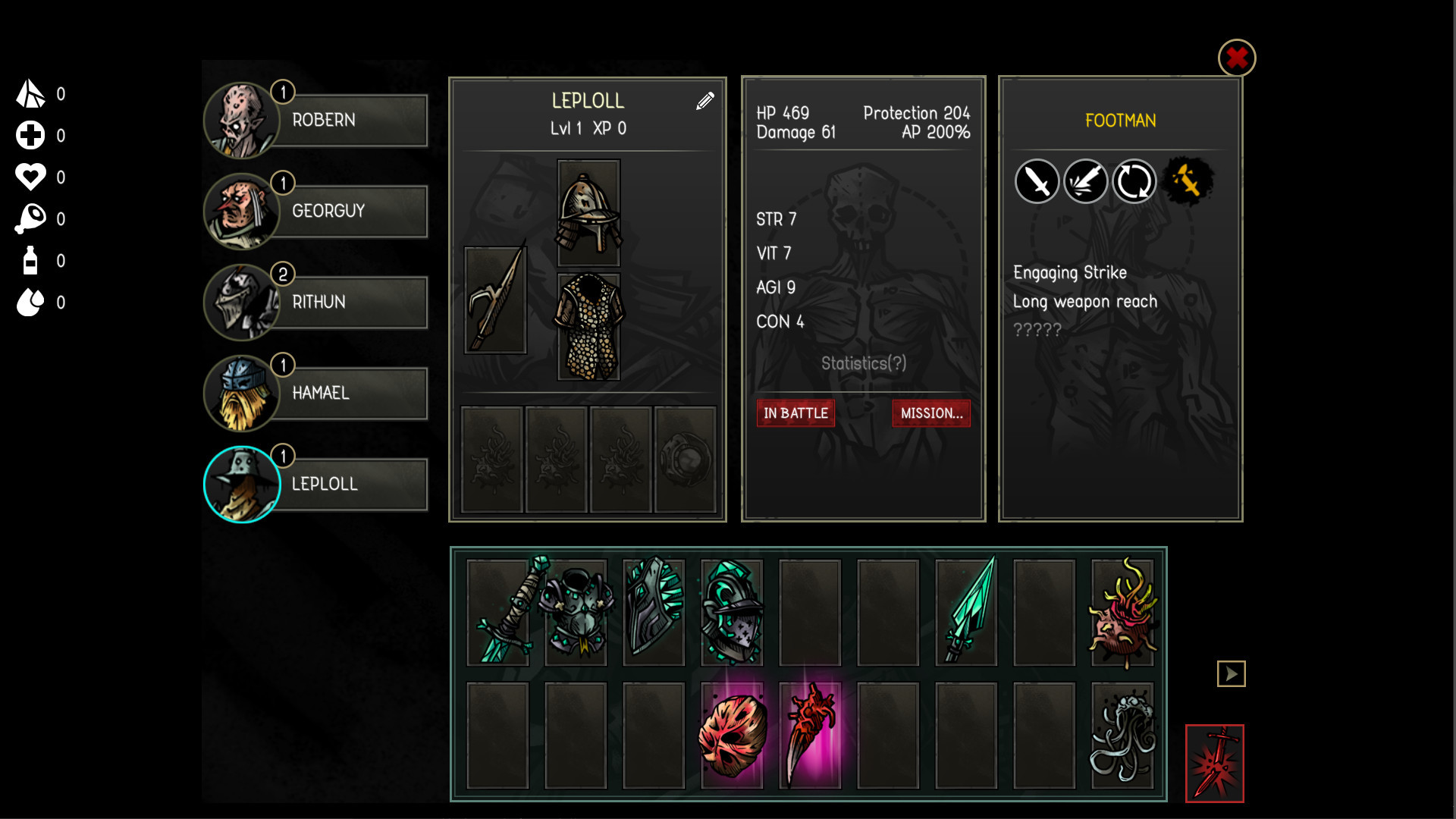
The B tier is not weak, just less defining. The Hunter delivers safe, reliable ranged damage and is excellent when protected, but it adds nothing to control and crumbles if enemies close in. The Spearman and Footman are dependable armoured anchors that soak hits and hold your formation; they simply lack the Guardian's battlefield-shaping displacement, so they defend without dictating. The C tier — the Bloodknight and Javelinier among them — covers fragile specialists capable of big damage but demanding careful protection and positioning to pay off. None of these are bad picks; they are role players that shine in the right band and punish you in the wrong one.
Building a band that survives
For a strong, survivable composition, anchor with a tank (ideally a Guardian for the displacement), bring a Priest for sustain, add mobile or self-healing damage like the Assassin and Berserker, and round out with protected ranged damage from a Hunter. Lead every fight with control — use displacement and terrain — and let your damage dealers clean up from safety. Then layer mutators on top to push your favourite units further; see our mutators guide for how to do that without crippling them. For the tactics that make any composition work, read the combat guide, and if you are still finding your feet, start with the beginner guide.
Do not stack damage dealers and hope to win the race. Urtuk punishes glass cannons hard. A band with a tank, a Priest and protected damage will out-survive a pure-damage squad every time, and surviving is how you win.